
Venous Ulcer Treatment in Dwarka: Closing Stubborn Leg Wounds
Published: 17 August 2026 · Last Updated: August 2026
Key Takeaways
- Venous ulcers form above the ankle because failed vein valves raise pressure inside the leg tissues.
- Compression therapy is the single most important treatment, because it reverses that raised pressure daily.
- Brown skin staining, ankle swelling and itching usually appear months before the skin actually breaks.
- An ulcer that has not shrunk after six weeks of proper care needs a specialist assessment, not stronger ointment.
- Elegance Clinic runs only at Adajan and Vesu in Surat, so patients from Dwarka plan a travel based visit.
Venous Ulcer Treatment in Dwarka starts with one fact that changes everything for patients: a venous ulcer is a circulation problem wearing the disguise of a skin problem. When the valves inside the leg veins stop closing properly, blood pools around the ankle, pressure rises in the tissue, and the skin eventually breaks open. Consequently ointments and daily dressings alone rarely close such a wound, while treatment aimed at the vein pressure itself heals the majority of them.
Dr. Ashutosh Shah meets this pattern almost every week at Elegance Clinic. Patients from coastal Saurashtra arrive with a shallow, weeping wound just above the inner ankle that has stayed open for months, sometimes years. Although the wound looks small, the skin around it is stained brown, hard and itchy, which tells the real story of long standing vein pressure underneath.
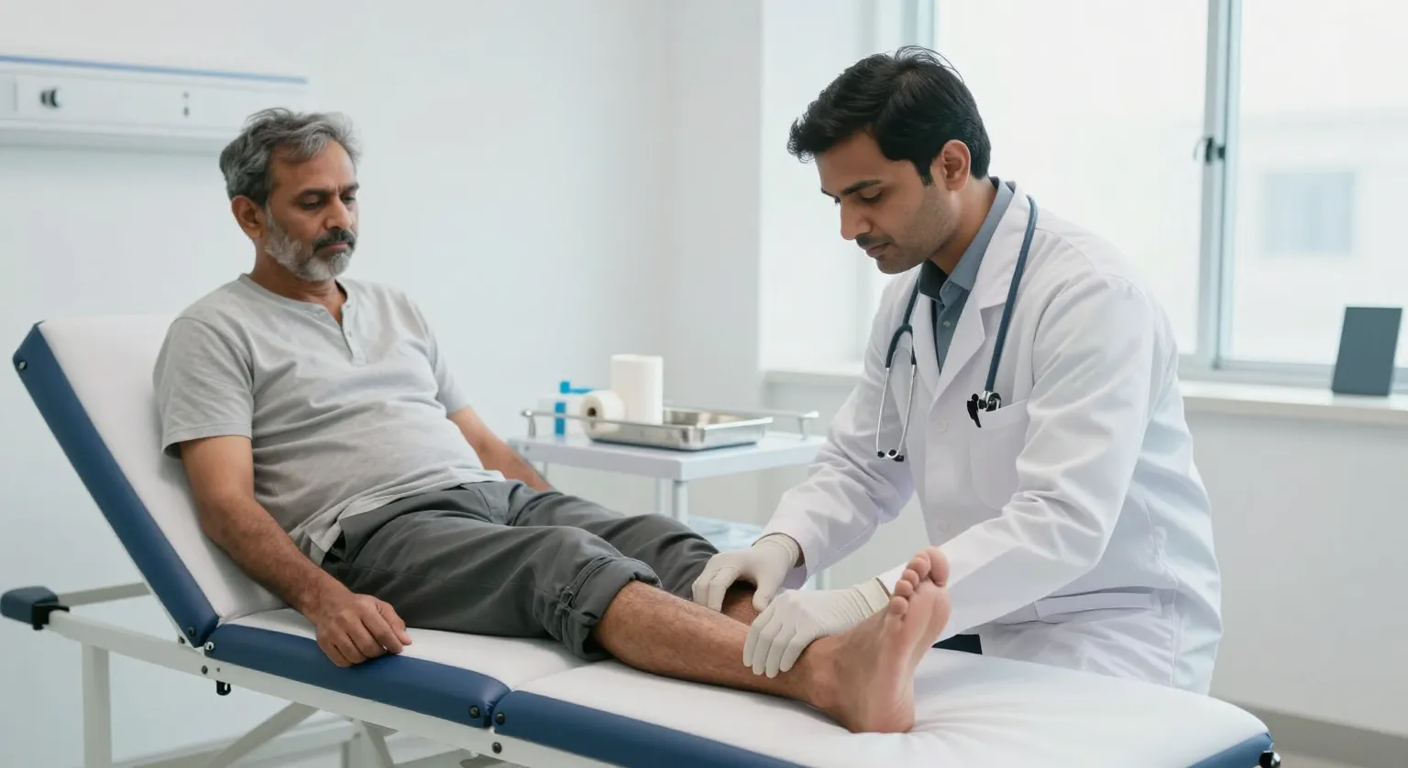
What is a venous ulcer?
A venous ulcer is an open wound on the lower leg caused by long term high pressure inside the leg veins. Typically it sits just above the inner ankle, looks shallow with irregular edges, and leaks clear fluid. Since the skin around it is already damaged, healing stalls without pressure control.
A venous ulcer is a shallow, slow healing wound above the ankle that appears when damaged leg vein valves allow blood to pool, raising tissue pressure until the skin breaks down.
According to the NHS, venous leg ulcers are the most common type of leg ulcer, and most of them heal within a few months once compression treatment is applied correctly. That single sentence explains why so many long standing wounds in Saurashtra are treatable rather than permanent. Moreover it explains why the treatment plan must look at the whole leg instead of the wound surface.
Why do leg veins create open wounds?
Leg veins carry blood upward against gravity using one way valves and calf muscle pumping. When those valves leak, blood falls back down and pressure builds around the ankle. Gradually that pressure pushes fluid and blood pigment into the skin, starving it of oxygen until a minor knock opens a wound.
Several everyday factors make this worse for patients living around Dwarka and the coastal belt. Long hours standing at shops, boats or temple duty keep the calf pump idle. Previous deep vein clots, varicose veins, pregnancy and family history all raise the risk further. Additionally excess weight increases the load on ankle veins throughout the day.
Warning signs long before the skin breaks
Most patients notice changes for a year or more before an ulcer appears, though the changes feel too minor to report. Recognising them early prevents the wound entirely.
- Ankle swelling that worsens by evening and settles overnight.
- Brown or reddish staining of the skin around the ankle.
- Skin that feels tight, hard or leathery when pinched.
- Persistent itching, flaking or eczema like patches on the lower leg.
- Visible bulging veins, aching, or a heavy feeling after standing.
Whenever these signs appear together, treatment at that stage is simple and inexpensive. Once the skin breaks, however, healing needs weeks of disciplined care instead of a few lifestyle corrections.
How is venous ulcer treatment planned?
Planning starts with confirming that the wound truly is venous and that the arteries supplying the leg are healthy. Therefore Dr. Ashutosh Shah checks foot pulses, measures ankle pressure, and orders a Doppler ultrasound of the leg veins. Wound swabs and blood sugar testing follow when infection or diabetes is suspected.
This step matters more than patients expect. Compression bandaging heals venous ulcers, yet the same bandaging can harm a leg whose arteries are blocked. Because mixed arterial and venous disease is common after the age of sixty, the pressure test protects the limb before any bandage is applied.
Treatments that actually close the wound
Effective venous ulcer treatment in Dwarka patients receive at Elegance Clinic follows a predictable sequence rather than a single miracle product. Each stage removes one barrier to healing.
- Wound bed preparation. Dead tissue, slough and thick crust are removed gently so healthy tissue can grow. Cleaning is repeated at each dressing change rather than once.
- Graduated compression. Multi layer bandaging or fitted stockings squeeze firmly at the ankle and less at the calf, which pushes pooled blood upward and lowers tissue pressure.
- Infection control. Antibiotics are used only when true infection is present, because routine antibiotic use breeds resistance without speeding healing.
- Correcting the faulty veins. Laser ablation, radiofrequency closure or sclerotherapy seals the leaking veins, which reduces the chance of the ulcer returning later.
- Skin cover for large wounds. A thin skin graft closes wounds that stay clean but too wide to fill in on their own, shortening healing from months to weeks.
Results from similar reconstructive and wound care work are shown on the before and after results page, which helps families understand realistic timelines. Notably most venous ulcers shrink visibly within four weeks once compression is correct and consistent.
Getting care from Dwarka, then Surat
Honesty matters here, so patients should know that Elegance Clinic has no branch, camp or visiting centre in Dwarka. The clinics operate only at Adajan and Vesu in Surat, roughly five hundred kilometres away by road. Local dressing support in Dwarka therefore remains an important part of the plan.
Practically, the arrangement works like this. Day to day dressings and compression continue with a nurse or family member near home. Specialist steps such as Doppler assessment, vein closure or skin grafting happen during a planned visit to Surat, usually bundled into one trip. Afterwards video follow ups with wound photographs replace most routine travel, and the outstation patient guide explains scheduling, stay and travel planning in detail.
Cost and financing
Cost depends on the wound size, whether vein closure is needed, and whether a graft becomes necessary. Since these variables differ hugely between two patients with similar looking ulcers, no honest fixed price can be quoted online. An examination based estimate is given in writing after the Doppler report.
One comparison helps families decide. Months of repeated dressings, antibiotics and lost working days often cost more in total than definitive treatment does once. For planned procedures, monthly payment options are explained on the EMI and financing page, so treatment need not wait for a lump sum.
Myths that keep ulcers open
Myth: the wound needs air, so leave it open. Uncovered wounds dry out and heal slower, while a moist, protected wound bed heals faster.
Myth: strong antibiotics will close it. Antibiotics treat infection only, and they cannot lower the vein pressure that created the ulcer.
Myth: surgery is the only answer. Many ulcers close with compression alone, and vein procedures are added mainly to prevent recurrence.
Myth: an old ulcer can never heal. Wounds open for several years still close regularly once the underlying pressure problem is addressed properly.
Aftercare that prevents the next ulcer
Healing the wound is only half the work, because roughly one in four healed venous ulcers returns without preventive care. Fortunately prevention is straightforward and cheap.
- Wear prescribed compression stockings daily, put on before getting out of bed.
- Elevate the legs above hip level for twenty minutes, two or three times a day.
- Walk regularly, since the calf muscle is the body's natural vein pump.
- Moisturise the lower leg to stop cracks in fragile, stained skin.
- Report any new blister, redness or leak within days rather than weeks.
Why patients choose Elegance Clinic
Families travelling for venous ulcer treatment in Dwarka and across Devbhoomi Dwarka district usually want one thing, a plan that ends the cycle rather than another dressing schedule. Dr. Ashutosh Shah, whose profile and case work appear on his professional site, combines plastic and reconstructive surgical training with dedicated wound care experience, which allows compression, vein correction and skin cover to be planned together.
Equally important, communication stays plain and unhurried. Patients receive a written plan, realistic healing timelines and clear cost expectations before anything begins. To discuss a long standing leg wound, families can use the online consultation booking page or reach the team through the clinic contact page with recent wound photographs.
FAQs
How long does a venous leg ulcer take to heal?
Most venous ulcers heal within three to four months once correct compression is applied consistently. Smaller wounds often close sooner. Larger or older ulcers may need skin grafting, which shortens healing considerably compared with waiting for natural closure.
Is a venous ulcer dangerous?
A venous ulcer is rarely life threatening, though it can become seriously infected and disabling if neglected. Long standing untreated ulcers occasionally undergo skin changes that need a biopsy, so persistent wounds always deserve proper medical assessment.
Can I walk normally with compression bandages?
Walking is actively encouraged with compression in place, because calf muscle movement helps pump blood upward. Comfortable footwear one size larger usually accommodates the bandage. Prolonged standing still, however, works against the treatment and should be limited.
Why does my ankle skin look brown?
Brown staining comes from iron pigment leaking out of congested veins into the skin over years. Although the discolouration itself is harmless, it signals sustained vein pressure and marks the exact area where an ulcer is likely to form.
Do I need surgery for varicose veins as well?
Vein closure is recommended when ultrasound confirms significant valve failure, mainly to stop the ulcer returning after healing. Not every patient needs it. Compression remains the priority, while vein treatment protects the result long term.
What dressing works best on a leg ulcer?
No single dressing suits every wound, since choice depends on how much fluid the ulcer produces and whether infection exists. Compression underneath matters far more than the dressing brand chosen above it.
Can diabetes make a venous ulcer worse?
Diabetes slows healing, raises infection risk and often adds nerve damage that hides early warning signs. Wounds in patients with diabetes therefore need tighter sugar control, more frequent review and careful checking of foot circulation.
Is treatment possible without travelling for every dressing?
Yes, routine dressings and compression can continue near home with local nursing help. Specialist steps like ultrasound assessment, vein closure or grafting are grouped into planned visits, with video follow ups covering most reviews afterwards.
Ready to discuss your concern in person? Book a private consultation at our Adajan or Vesu clinic. Call +91 83205 00350 or use the Book Consultation button.