
Varicose Vein Ulcer Treatment in Gondal: Closing Leg Wounds
Key Takeaways
- Venous ulcers form because damaged leg vein valves let blood pool, which raises pressure in ankle skin.
- Compression therapy heals the majority of these ulcers, provided arterial supply has first been confirmed as adequate.
- Treating the faulty veins themselves dramatically reduces the chance of the same ulcer returning.
- Doppler testing is essential before compression, because tight bandaging on a poorly supplied leg causes harm.
- Darkened, hardened ankle skin signals long standing disease that deserves assessment before any wound appears.
- Elegance Clinic operates only at Adajan and Vesu in Surat, so Gondal patients plan one thorough assessment visit.
A wound just above the ankle that weeps, itches and refuses to close is rarely a skin problem. Varicose Vein Ulcer Treatment in Gondal begins with a simple realisation: the ulcer is a symptom, and the failing leg veins underneath are the actual disease. Unless venous pressure is reduced, dressings alone will keep the wound open for years.
Patients reaching Dr. Ashutosh Shah from Gondal and across Saurashtra often carry a familiar history. Ointments changed every few weeks, antibiotics repeated several times, some improvement each monsoon followed by relapse. Meanwhile the surrounding skin darkened and hardened, which is exactly what long standing venous disease does when the underlying valves are never treated.
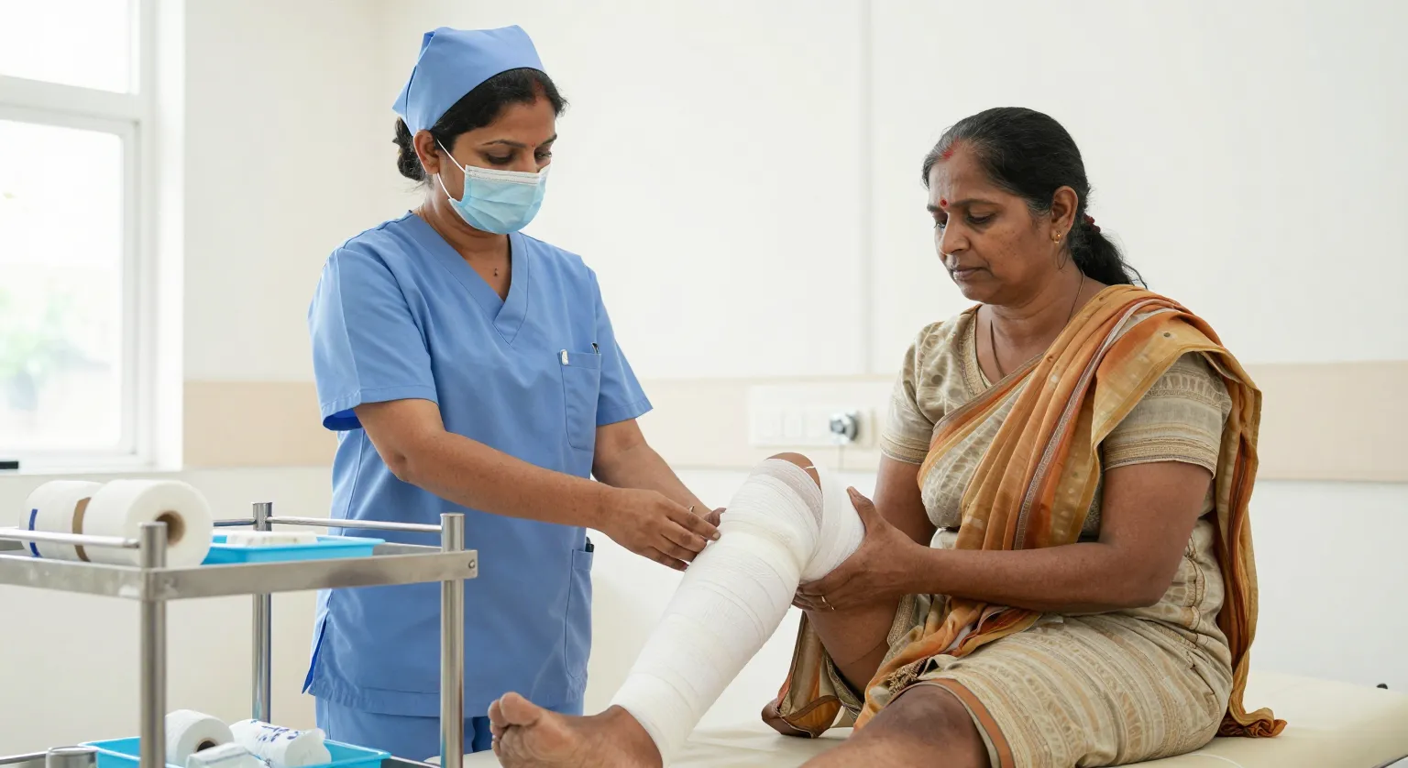
What is a varicose vein ulcer?
A varicose vein ulcer, also called a venous leg ulcer, is a shallow wound near the inner ankle caused by sustained high pressure inside the leg veins. Skin there becomes fragile, discoloured and easily broken. Once open, the same pressure prevents closure, therefore the wound persists for months.
A venous leg ulcer is a shallow, often weeping wound above the ankle that develops when damaged vein valves allow blood to pool, raising pressure until the overlying skin breaks down.
Appearance is fairly typical. These ulcers look flat and moist with irregular edges, sit on brownish stained skin, and cause aching rather than severe pain. Legs usually swell by evening and improve overnight, which is a useful clue during the first consultation.
Why do varicose veins cause leg ulcers?
Healthy vein valves push blood upward against gravity. When those valves fail, blood falls back and collects in the lower leg, so pressure inside the small skin vessels rises continuously. Fluid, proteins and pigment then leak into surrounding tissue, which slowly starves and hardens the skin until it breaks.
The NHS notes that venous leg ulcers account for the large majority of leg ulcers seen in practice, which explains why vein assessment matters so much. Photographs of healed wounds and grafted ulcers appear in the before and after gallery.
How do you know an ulcer is venous?
Venous ulcers sit around the inner ankle, feel achy rather than sharply painful, and improve when the leg is raised. Surrounding skin looks brown, thickened or scaly, and the leg swells during the day. Arterial ulcers differ, appearing punched out, painful at night and often on the toes.
- Location: inner ankle placement strongly suggests venous origin rather than pressure or arterial disease.
- Skin colour: brown staining from old blood pigment reflects years of raised venous pressure.
- Swelling pattern: ankles that puff by evening and settle overnight point clearly toward vein failure.
- Pain behaviour: relief on elevation favours venous disease, whereas relief on hanging the leg down suggests arterial trouble.
How Varicose Vein Ulcer Treatment in Gondal Patients Is Structured
- Vascular assessment: pulses, Doppler study and ankle pressure measurement confirm whether arterial supply allows safe compression.
- Venous mapping: duplex ultrasound identifies exactly which veins and valves have failed, guiding later treatment.
- Wound preparation: slough and dead tissue are removed, while swabs guide antibiotics only when genuine infection exists.
- Graduated compression: multilayer bandaging or fitted stockings reduce venous pressure, which is what actually closes the ulcer.
- Correcting the veins: laser ablation, sclerotherapy or surgery treats the underlying reflux once the wound is controlled.
- Closure of stubborn wounds: large ulcers that stall despite compression are closed with a thin skin graft.
Compression and why it does the real work
Graduated compression squeezes the leg firmly at the ankle and less further up, so blood is pushed back toward the heart instead of pooling. Swelling falls, tissue oxygenation improves, and the wound finally starts contracting. Most venous ulcers heal within three to six months under consistent compression.
Consistency decides the outcome. Bandages removed at night, stockings abandoned during hot weather, or long periods standing without elevation all stall progress. Because arterial disease makes compression dangerous, Doppler testing before starting is never skipped for convenience.
Treating the veins behind the ulcer
Healing the wound without correcting the veins invites recurrence, and repeat ulcers are common in untreated legs. Modern options are largely minimally invasive. Endovenous laser or radiofrequency ablation seals the faulty vein internally, foam sclerotherapy closes smaller tributaries, and open surgery is reserved for selected anatomy.
Recovery from these procedures is quick, with most patients walking the same day and returning to routine work within a few days. Compression continues afterwards, therefore stockings remain part of life for a while even once everything has closed.
Should Gondal patients travel to Surat?
Simple ulcers with confirmed good circulation heal locally under proper compression, so travelling weekly serves nobody. Referral makes sense when a wound has not shrunk in six to eight weeks, when circulation has never been tested, when the ulcer keeps returning, or when reconstruction is being discussed.
Gondal sits roughly three hundred and fifty kilometres from Surat by road, therefore families sensibly plan one visit combining Doppler study, duplex mapping, debridement and a written plan. Clinics operate at Adajan and Vesu in Surat only, with no branch anywhere in Saurashtra. Stay arrangements and video review after returning home are explained in the outstation patient guide.
What does treatment cost?
Cost varies with ulcer size, duration of compression treatment, dressing type, whether vein ablation is performed, and whether grafting becomes necessary. Compression care spread across months costs steadily but modestly, whereas laser ablation and day care surgery involve a defined procedure fee.
Estimates are written after examination and duplex scanning rather than over the telephone, because vein anatomy differs in every leg. Venous ulcer care is medically necessary, so insurance frequently contributes, and instalment options are described in the EMI and financing guide.
Myths worth discarding
- Leg ulcers are not caused by weak blood or heat in the body, despite how often that explanation circulates.
- Tight bandaging is not universally safe, since compression on an arterially compromised leg causes serious damage.
- Antibiotics do not heal venous ulcers, because most such wounds are colonised rather than truly infected.
- Healing the wound does not cure the problem, given that untreated veins commonly produce another ulcer.
- Complete bed rest is not the answer, as walking activates the calf muscle pump that helps venous return.
Aftercare and preventing recurrence
Wear the prescribed compression stockings daily and lifelong where advised, replacing them every few months as elastic fatigues. Elevate the legs above heart level for short periods several times a day, and walk regularly, since calf muscle activity pumps blood upward far better than resting does.
Moisturise the fragile ankle skin every day, avoid knocks and scratches, and treat any small break immediately rather than waiting. Maintain a healthy weight, keep moving during long journeys, and attend review appointments so early skin changes are caught before another ulcer forms.
Why patients choose Elegance Clinic
Good outcomes need one team handling wound care, vein correction and, where required, reconstruction. Elegance Clinic keeps assessment, compression, vein treatment and skin grafting inside a single plan, and Dr. Ashutosh Shah brings more than twenty two years of reconstructive experience to non healing wounds. Consultations run at Adajan and Vesu in Surat.
Anyone starting Varicose Vein Ulcer Treatment in Gondal should confirm one thing before accepting any bandage. Confirm that arterial flow has been measured, because compression applied to a leg with blocked arteries turns a slow wound into an emergency. Assessment can be arranged through the clinic contact page or by using online consultation booking.
FAQs
How long does a venous leg ulcer take to heal?
With consistent compression, most close within three to six months. Very large or long standing ulcers take longer, and wounds that show no measurable shrinkage after six weeks usually need reassessment rather than continued dressings.
Are compression stockings safe for everyone?
No, they are unsafe when leg arteries are significantly narrowed. Doppler testing before starting compression identifies that risk, which is why measurement always precedes bandaging in properly organised wound care.
Will the ulcer come back after it heals?
Recurrence is common when the faulty veins remain untreated, affecting a substantial share of patients within a few years. Correcting the underlying reflux and wearing stockings together reduce that risk considerably.
Is vein laser treatment painful?
The procedure is done under local anaesthesia and most patients describe only pressure or mild stinging. Walking begins the same day, and ordinary discomfort afterwards settles within a few days with simple painkillers.
Can I walk with an open leg ulcer?
Walking is encouraged, because calf muscle movement pumps blood upward and supports healing. Prolonged standing still is the harmful pattern, so alternating short walks with periods of leg elevation works best.
Does the dark skin around the ulcer ever fade?
Brown staining comes from iron pigment deposited over years and fades only partially. Improvement occurs slowly once venous pressure falls, though some permanent discolouration usually remains around the healed area.
When is a skin graft needed?
Grafting is considered when a large ulcer stays clean yet stops shrinking despite good compression. Covering the area shortens healing dramatically, provided the underlying venous pressure has already been brought under control.
Ready to discuss your concern in person? Book a private consultation at our Adajan or Vesu clinic. Call +91 83205 00350 or use the Book Consultation button.