
Skin Graft for Diabetic Wound in Gondal: When It Works
Published: 17 August 2026 · Last Updated: August 2026
Key Takeaways
- A skin graft closes a diabetic wound with the patient's own skin, usually taken as a thin layer from the thigh.
- Grafting works only on a clean wound with healthy pink tissue and adequate blood flow beneath it.
- Blocked leg arteries must be assessed first, because a graft placed on a poorly supplied wound will fail.
- Most grafts take within five to seven days, while full comfort in footwear returns over several weeks.
- Elegance Clinic operates only at Adajan and Vesu in Surat, so Gondal patients plan a travel based treatment visit.
A Skin Graft for Diabetic Wound in Gondal patients is not the first step in treatment, and understanding that saves a lot of anxiety. A graft is a thin sheet of the patient's own skin, lifted from the thigh and laid over a clean wound so the surface closes in weeks instead of months. However the wound must first be free of dead tissue and infection, with reasonable blood supply underneath, otherwise the graft simply will not take.
Dr. Ashutosh Shah explains this order to families almost daily at Elegance Clinic. Patients often arrive after six or eight months of dressings, convinced that surgery was refused earlier for no reason. In reality the wound was never graft ready, so the sensible plan is to prepare the wound properly and then close it, which is exactly how limbs get saved.
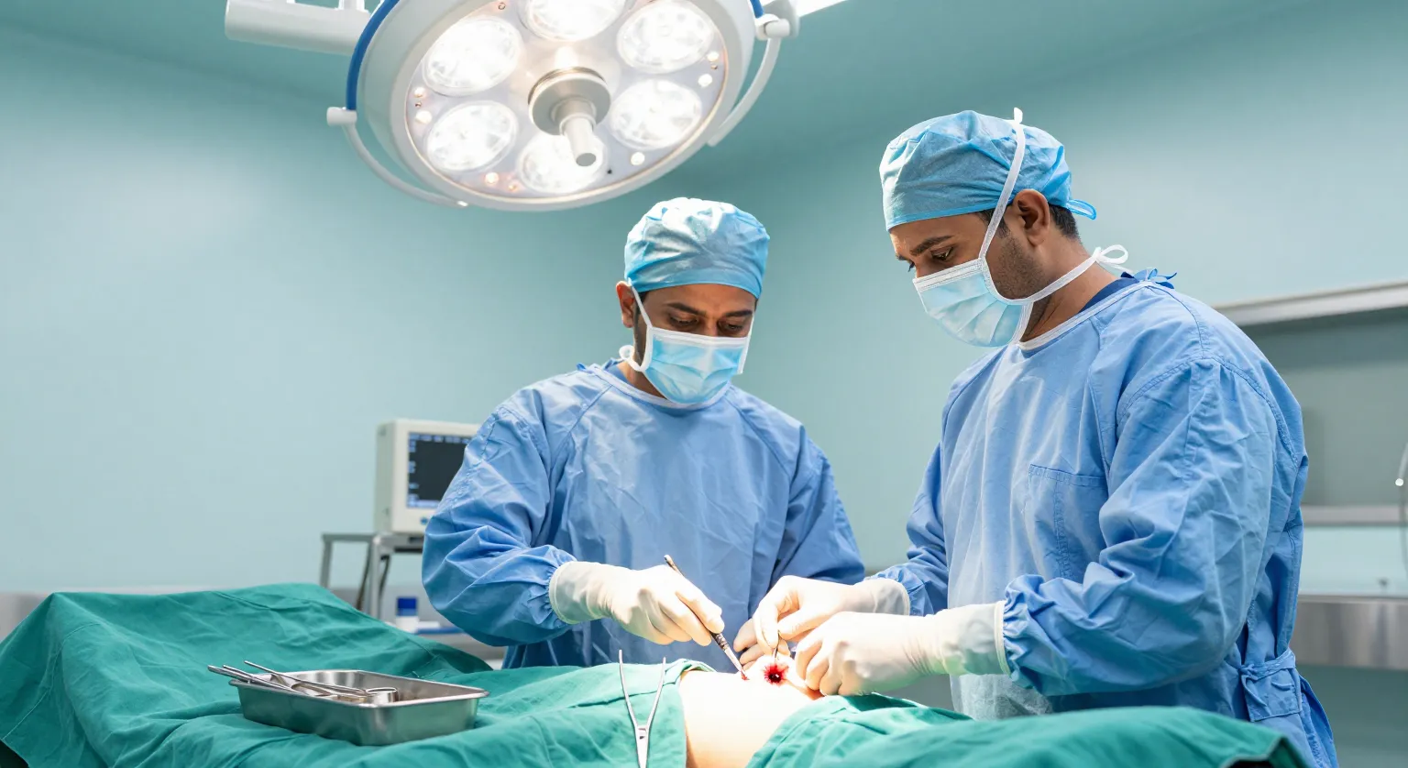
What is a skin graft for a diabetic wound?
A skin graft is a thin layer of healthy skin harvested from an unaffected area, most often the outer thigh, and transferred onto a prepared wound. Once laid down, the graft absorbs fluid from the wound bed and grows new blood vessels within days. Consequently a wound that was healing at a millimetre a month closes quickly.
A skin graft for a diabetic wound is a thin sheet of the patient's own skin placed over a cleaned, well supplied ulcer so that the surface heals in weeks rather than many months.
Two varieties are used in practice. Split thickness grafts take only the upper layers, cover large areas and heal the donor site naturally within two weeks. Full thickness grafts take the whole skin depth, suit smaller wounds over pressure points, and give slightly tougher cover where a foot will bear weight.
Why do diabetic wounds need grafting at all?
Diabetes damages small blood vessels and nerves, so wound healing slows dramatically and pain warnings disappear. Ulcers therefore grow wider and deeper before anyone reacts. Beyond a certain size, the skin edges simply cannot creep across the gap, which is precisely when a graft becomes the practical solution.
The scale of the underlying problem is worth knowing. The World Health Organization reports that diabetes affects hundreds of millions of adults worldwide, with numbers rising fastest in low and middle income countries. Since foot complications are among the leading causes of hospital admission in this group, closing wounds quickly is a limb saving priority rather than a cosmetic one.
Is my wound ready for a skin graft?
Readiness is judged by four things: clean tissue, controlled infection, adequate circulation and stable blood sugar. Wounds showing pink granulation tissue with minimal discharge usually accept a graft well. Conversely wounds with slough, exposed bone or absent foot pulses need preparation first, otherwise the graft fails.
Before scheduling surgery, Dr. Ashutosh Shah checks the following in the clinic.
- Foot pulses and Doppler flow, because a graft cannot survive without blood supply beneath it.
- Depth of the wound and whether bone or tendon lies exposed at its base.
- Signs of active infection such as spreading redness, swelling or foul discharge.
- Recent HbA1c and kidney function, since both influence healing speed directly.
- Nutrition, particularly protein intake, which many long term patients neglect completely.
Where arteries are narrowed, angioplasty or bypass comes first. Only after flow improves does grafting make sense, and skipping that sequence is the most common reason a graft fails elsewhere.
How the procedure is done
Most diabetic foot grafts are performed under spinal or regional anaesthesia, which keeps the patient comfortable and avoids general anaesthesia risks. The whole process usually takes under an hour.
- Wound bed debridement. Dead tissue, slough and unhealthy edges are removed until the base bleeds evenly, giving the graft a living surface to attach to.
- Harvesting the skin. A thin sheet is shaved from the outer thigh with a dermatome, leaving a donor area comparable to a graze that heals on its own.
- Meshing the graft. Tiny slits are cut across the sheet so it stretches over a wider area and allows fluid to escape rather than lift the graft.
- Securing the cover. The graft is laid on the wound and held with fine sutures, staples or glue, then dressed with a snug non stick dressing.
- Protected rest. The limb is elevated and kept still for several days, because movement shears the delicate new vessels growing into the graft.
Healing timeline and realistic results
The first dressing inspection happens around day five, when a successful graft looks pink and firmly stuck down. Small patchy areas that fail are normal and usually fill in on their own. Walking with protective footwear typically resumes between two and four weeks, depending on the wound position.
Colour and texture keep improving for several months, though the grafted skin always looks slightly different from surrounding skin. Photographs of comparable diabetic wound and skin grafting outcomes appear on the before and after results page, which gives families a fair idea of what healed skin looks like rather than an idealised one.
Planning a Skin Graft for Diabetic Wound in Gondal patients
Clear information prevents wasted journeys, so patients should know that Elegance Clinic has no branch or visiting camp in Gondal. Treatment happens at Adajan and Vesu in Surat, around three hundred and fifty kilometres away, reachable comfortably by road or rail in a day.
Sensible planning keeps travel to a minimum. Wound photographs and existing reports are reviewed before the journey, so the visit is scheduled only when grafting is genuinely close. Debridement, assessment and grafting are then grouped into a single admission, while dressings afterwards continue with a trusted nurse near home. Detailed guidance on stay, timing and follow ups sits in the outstation patient guide, and video reviews with fresh photographs handle most check ups later.
Cost and financing
Total cost depends on wound size, the number of debridements needed beforehand, anaesthesia type and hospital stay. Since a small heel graft and an extensive foot resurfacing are entirely different operations, a written estimate follows examination rather than a phone call. Patients receive that estimate before admission, with no surprise additions afterwards.
Worth weighing too is the cost of doing nothing. Endless dressings, repeated antibiotic courses and lost earnings over a year frequently exceed the price of definitive closure. Monthly payment plans are explained on the EMI and financing page, which helps families act early instead of waiting for the wound to worsen.
Myths worth correcting
Myth: skin is taken from another person. Standard grafts use the patient's own skin, so rejection is not a concern.
Myth: the donor site leaves a terrible scar. Split thickness donor areas heal like a deep graze and fade to a pale patch over months.
Myth: grafting can be done on any wound immediately. Preparation and circulation matter more than speed, because a graft on a dirty or poorly supplied bed fails.
Myth: after grafting, diabetes control no longer matters. Sugar control decides both graft take and whether a new ulcer appears elsewhere.
Aftercare that protects the graft
Graft survival depends heavily on the first two weeks, though long term foot habits decide whether the result lasts.
- Keep the limb elevated and avoid weight bearing exactly as instructed.
- Never open the dressing yourself, since early peeking lifts the fragile graft.
- Maintain blood sugar within the agreed range with medication and diet.
- Eat protein rich food daily, because healing tissue is largely protein.
- Use offloading footwear or insoles once walking restarts, particularly on the sole.
- Inspect both feet every evening and report any new blister immediately.
Why patients choose Elegance Clinic
Families searching for a Skin Graft for Diabetic Wound in Gondal generally want a surgeon who treats the whole limb rather than the visible wound alone. Dr. Ashutosh Shah, whose background is described on his clinic profile page, brings plastic and reconstructive surgical training to diabetic foot problems, so debridement, flap options and grafting are planned as one continuous decision.
Straight talk matters just as much as technique. Patients hear honestly whether the wound is graft ready, what could still go wrong, and how long recovery genuinely takes. To start with a wound review, families can use the online consultation booking page or send recent photographs through the clinic contact page.
FAQs
Does a skin graft hurt afterwards?
The grafted wound itself causes little pain because diabetic ulcers often have reduced sensation. Most discomfort comes from the thigh donor area, which stings for a few days and settles well with simple pain medication and dressings.
How long does the graft take to stick?
New blood vessels grow into the graft over five to seven days, which is when the first dressing check happens. Complete surface healing takes about three weeks, while strength and colour continue improving for several months.
What happens if part of the graft fails?
Small patchy loss is common and usually fills in naturally with dressings alone. Larger failures need repeat grafting after the cause, often infection, pressure or poor circulation, has been identified and corrected properly.
Can a graft be done if bone is exposed?
Exposed bone or tendon will not support a plain graft, since these surfaces lack the blood supply a graft needs. Such wounds require a flap procedure, which brings its own blood supply with the tissue.
Will the wound come back after grafting?
Recurrence depends on pressure and sugar control rather than the graft itself. Wearing offloading footwear, checking feet daily and keeping glucose steady dramatically reduces the chance of a new ulcer forming nearby.
How long is the hospital stay?
Many patients stay two to four days, mainly to keep the limb elevated and still during the critical early period. Stay length increases when infection control or circulation treatment is needed alongside the grafting.
Is grafting possible for wounds open for over a year?
Yes, long standing wounds are grafted regularly once the bed is cleaned and circulation confirmed. Duration matters far less than tissue quality, so an old ulcer is rarely a reason to abandon closure.
Ready to discuss your concern in person? Book a private consultation at our Adajan or Vesu clinic. Call +91 83205 00350 or use the Book Consultation button.