
Non-Healing Leg Ulcer Treatment in Jetpur: Why Wounds Stay Open
Published: 10 August 2026 · Last Updated: August 2026
Key Takeaways
- Any leg wound open beyond four to six weeks counts as non-healing and needs specialist assessment.
- Venous disease causes most leg ulcers, followed by arterial blockage, diabetes and prolonged pressure.
- Doppler studies and ankle pressure readings decide whether compression is safe or dangerous for that leg.
- Compression bandaging heals most venous ulcers, whereas arterial ulcers need blood flow restored first.
- Skin grafting closes large clean wounds quickly once infection and circulation have been sorted out.
- An ulcer unchanged after three months of correct treatment should be biopsied to exclude rarer causes.
A leg wound that has stayed open beyond six weeks is no longer a simple wound, and it will not close through dressings alone. Non-Healing Leg Ulcer Treatment in Jetpur therefore begins with one question that changes everything: why is this particular ulcer refusing to heal? Poor vein drainage, blocked arteries, diabetes, infection and pressure each demand a different answer, so treating the cause always comes before treating the surface.
Families who reach Dr. Ashutosh Shah tend to arrive carrying the same tired story. Months of daily dressings have passed, several antibiotic courses have been completed, and the ulcer looks much as it did at the start. Understandably, patience runs low by then. Once the underlying cause is finally identified and corrected, however, wounds that resisted treatment for a year frequently close within weeks.
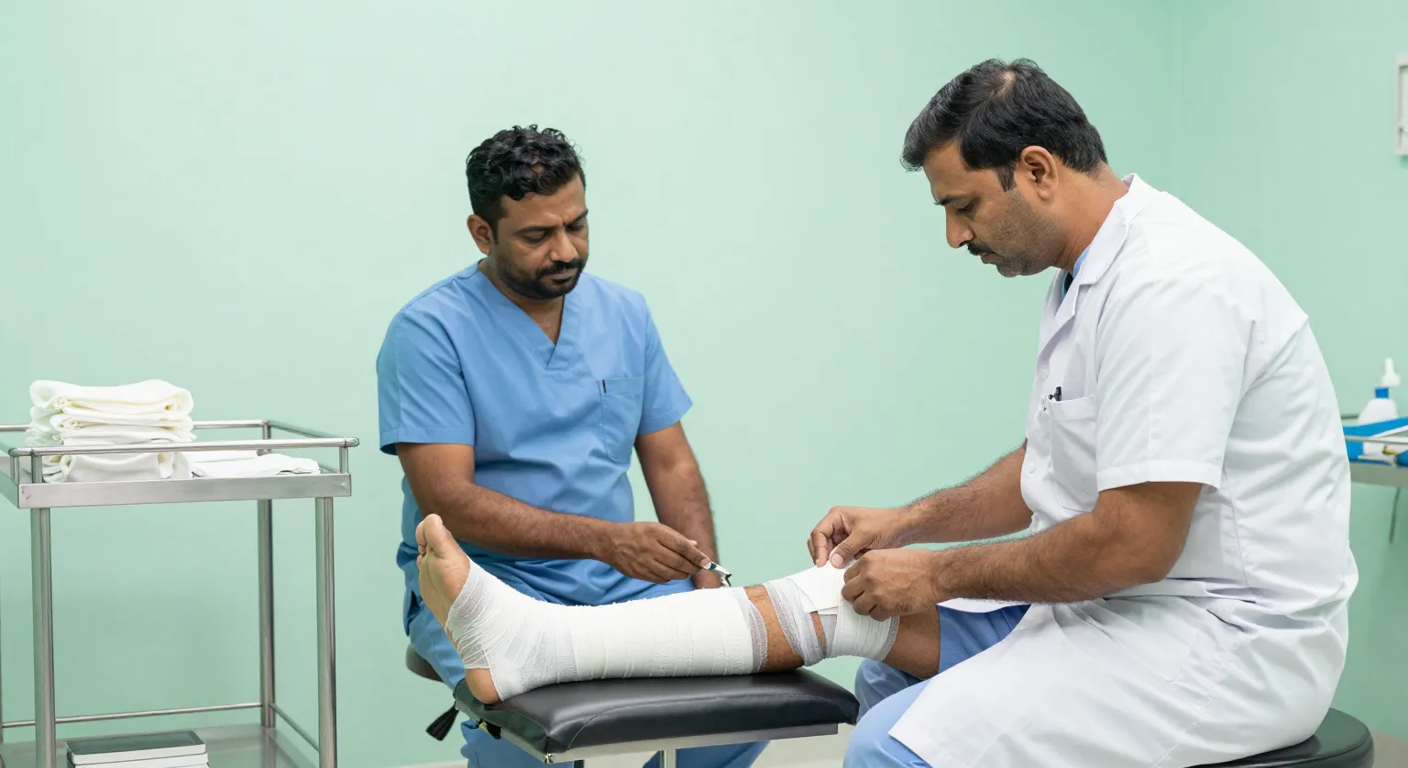
What makes an ulcer non-healing?
Healthy wounds shrink steadily week by week. A wound that shows no measurable reduction after four weeks of appropriate care, or that remains open past six weeks, has stalled and is classed as chronic. Something is actively blocking repair, and finding that obstacle is the whole task.
A non-healing leg ulcer is an open wound below the knee that has failed to close within six weeks despite proper care, usually because circulation, infection, pressure or an underlying disease is preventing normal repair.
Measurement beats impression here. Photographing the ulcer with a ruler at each review makes progress or its absence undeniable, which protects patients from months of unchanged treatment that quietly achieves nothing.
Why do leg ulcers refuse to heal?
Five causes account for the overwhelming majority. Venous insufficiency allows blood to pool in the leg, arterial disease starves tissue of oxygen, diabetes damages nerves and small vessels, sustained pressure kills skin over bony points, and untreated infection consumes the resources healing requires.
Diabetes deserves particular attention across Saurashtra. According to the World Health Organization, diabetes has risen sharply throughout South Asia, and foot and leg wound complications have climbed alongside it. Neuropathy removes the pain that would normally force early treatment, so wounds grow silently for weeks.
Other contributors matter too. Low haemoglobin, poor protein intake, kidney disease, smoking and certain medicines all slow repair. Rarely, a wound that never heals turns out to be a skin cancer or an inflammatory condition rather than an ordinary ulcer.
How can you tell the types apart?
Position and appearance give strong clues. Venous ulcers sit near the inner ankle, look shallow with irregular edges, and accompany swelling with brown skin staining. Arterial ulcers appear on toes or the outer ankle, look punched out and pale, and hurt badly at night.
Diabetic ulcers, by contrast, form under pressure points on the sole and stay painless because sensation has gone. Pressure sores develop over the heel or hip in patients confined to bed. Since the wrong assumption leads directly to the wrong treatment, examination and Doppler testing settle the question rather than guesswork.
Which tests actually guide treatment?
Assessment stays practical rather than excessive. Doppler ultrasound checks both arterial flow and vein valve function, ankle brachial pressure measurement confirms whether compression is safe, and blood tests cover sugar control, haemoglobin, protein and infection markers.
Deep tissue culture guides antibiotic choice far better than a surface swab, which mostly grows harmless surface organisms. Where bone lies exposed or the ulcer probes deeply, imaging looks for bone involvement. Additionally, any wound unchanged after three months of correct treatment warrants a biopsy to exclude malignancy.
Treatment options explained
- Compression therapy: graduated bandaging or stockings reverse venous pooling and heal the majority of venous ulcers, though only after arterial supply is confirmed adequate.
- Restoring arterial flow: angioplasty or bypass comes first whenever Doppler shows blockage, because no wound heals without blood supply.
- Debridement: dead tissue and the biofilm layer are cleared surgically, which converts a stagnant wound into a fresh healing surface.
- Modern dressings: foam, alginate and antimicrobial dressings maintain moisture balance and reduce dressing frequency considerably.
- Negative pressure therapy: a vacuum dressing draws out fluid, reduces swelling and accelerates granulation in large cavity wounds.
- Skin grafting: a thin graft from the thigh closes a clean granulating ulcer in one procedure, often ending months of stalled progress.
- Flap reconstruction: reserved for wounds exposing bone or tendon, where fresh tissue with its own blood supply must be brought in.
Grafting and flap results for long standing leg wounds can be viewed in the before and after gallery.
How Non-Healing Leg Ulcer Treatment in Jetpur is planned
- Complete assessment: ulcer history, previous treatments, diabetes control and leg examination are reviewed together in a single sitting.
- Circulation testing: Doppler and ankle pressure readings establish whether the problem is venous, arterial or mixed before anything else is decided.
- Infection control: deep culture directs targeted antibiotics, and any collection of pus is drained without delay.
- Wound bed preparation: debridement plus appropriate dressings or vacuum therapy convert the ulcer into a clean granulating surface.
- Definitive closure: compression continues for venous disease, while grafting or flap cover closes larger wounds that will not contract on their own.
- Prevention planning: stockings, offloading footwear, sugar targets and review dates are set so the same ulcer does not return.
Travelling to Surat from Jetpur
Elegance Clinic runs only at Adajan and Vesu in Surat, and no branch, camp or visiting centre exists in Jetpur. Families deserve that clarity before making any plan. Jetpur sits roughly six to seven hours away by road, therefore one properly organised visit works far better than repeated short trips with a painful leg.
Local hospitals and dressing clinics manage early wounds and routine care perfectly well, so travel makes sense only in defined situations: an ulcer open beyond six weeks, exposed bone or tendon, repeated infection at the same site, or an amputation suggestion the family wishes to review. The outstation patients guide explains scheduling, reports and accommodation, while Doppler reports and wound photographs sent through the clinic contact page allow much of the planning to happen before you travel. Later reviews then continue by video, with dressings done close to home.
What does treatment cost?
Cost tracks the cause and the extent of work needed. Compression therapy with dressings for a modest venous ulcer sits at the lower end, whereas angioplasty followed by debridement and skin grafting for a large wound costs substantially more. Hospital stay, if required, adds to the total.
A written estimate is provided after assessment, listing investigations, procedures, dressings, medicines and follow up. Because chronic wound treatment often runs across several weeks, instalment options help families plan sensibly, and the EMI and financing guide describes how those arrangements work.
Myths that delay healing
- Ulcers do not heal simply by being left open to air, since drying the surface actively slows repair.
- Longer antibiotic courses cannot close a wound whose real problem is poor circulation.
- Compression is not universally helpful, because applying it to an arterial ulcer causes serious harm.
- Painless wounds are not safer wounds, given that diabetic neuropathy simply removes the warning signal.
- Amputation is not the usual endpoint, as most legs are saved when the cause is corrected in time.
Aftercare and preventing recurrence
Recurrence is the real enemy with venous ulcers, since a healed leg without maintenance frequently breaks down again within a year. Wear the prescribed compression stockings daily, elevate the legs above hip level for short spells through the day, and keep walking, because calf muscle action pumps blood upward.
Skin care protects the newly healed area. Moisturise the leg daily, inspect it each evening, and treat any fresh crack or blister immediately rather than waiting. Should the skin break again, early review through online consultation booking prevents another long treatment cycle.
Why patients choose Elegance Clinic
Families choose Elegance Clinic because assessment, debridement, grafting and reconstruction all sit with one plastic surgeon under a single plan. Dr. Ashutosh Shah, whose professional background is detailed at drashutoshshah.com, brings over twenty two years of reconstructive experience across wound care, skin grafting, flap cover and limb salvage, which spares patients the delays that come from moving between separate departments.
Anyone arranging Non-Healing Leg Ulcer Treatment in Jetpur should ask two questions of any treating team. Ask whether circulation has been tested with Doppler rather than assumed, and ask what the plan is if the ulcer has not measurably shrunk in four weeks. Clear answers to both separate real treatment from indefinite dressing changes.
FAQs
How long should a leg wound take to heal?
Ordinary wounds close within two to four weeks. Any leg wound still open beyond six weeks, or one showing no measurable shrinkage after four weeks of care, needs specialist assessment rather than continued dressings alone.
Why does my ulcer keep coming back?
Recurrence almost always means the underlying cause was never corrected. Untreated vein disease, poor sugar control, continued pressure on the same spot or abandoned compression stockings account for the majority of ulcers that return.
Are daily dressings enough on their own?
Dressings maintain a healthy environment, though they cannot fix poor circulation, infection or pressure. Treatment succeeds only when the cause is addressed alongside good wound care, which is why stalled ulcers need reassessment.
Is skin grafting painful?
The graft site itself causes little discomfort. The donor area on the thigh feels like a graze for several days and settles quickly with simple painkillers. Most grafting is performed as a short procedure.
Can compression stockings be worn by everyone?
No. Compression helps venous ulcers considerably yet can damage a leg with reduced arterial flow. Ankle pressure measurement must confirm adequate circulation before any compression bandage or stocking is applied.
Will I lose my leg?
Most patients will not. Limb loss becomes likely only when circulation cannot be restored or when infection threatens life. Timely assessment, restored blood flow and proper wound clearance save the great majority of legs.
Does diet make a difference to healing?
Considerably so. Protein, iron, vitamin C and zinc are all needed for tissue repair, and low haemoglobin slows healing markedly. Correcting nutritional gaps often speeds up progress in wounds that had stalled.
Can follow up happen from my home town?
Usually yes. Dressings continue locally while wound photographs and reports are reviewed remotely by video. In person visits are then reserved for procedures or for reassessment if progress stops unexpectedly.
Ready to discuss your concern in person? Book a private consultation at our Adajan or Vesu clinic. Call +91 83205 00350 or use the Book Consultation button.