Limb Salvage Surgery in Jetpur: Saving Feet From Amputation
Published: 10 August 2026 · Last Updated: August 2026
Key Takeaways
- Limb salvage aims to preserve a functional foot or leg instead of amputating it, using staged surgery.
- Circulation testing comes first, since restoring blood flow determines whether any salvage attempt can succeed.
- Thorough removal of dead and infected tissue is essential, because infection left behind defeats every later step.
- Skin grafts and flaps close the resulting defect with living tissue that carries its own blood supply.
- Removing one infected toe frequently prevents a far larger amputation and preserves normal walking.
- A second opinion is reasonable whenever amputation is advised before circulation has been formally assessed.
Being told that a foot or leg must be removed is rarely the end of the discussion. Limb Salvage Surgery in Jetpur exists precisely for that moment, because a great many limbs recommended for amputation can still be saved once blood flow is restored, infection is cleared properly and the resulting defect is covered with healthy tissue. Timing decides much of the outcome, so a prompt second look matters enormously.
Families who reach Dr. Ashutosh Shah usually arrive frightened and short of information. A wound has spread, a toe has darkened, fever has appeared, and someone has used the word amputation without explaining what was tried first. Understandably that conversation devastates a household. In practice, a structured assessment often reveals treatable blockages and salvageable tissue that nobody had yet investigated.
What is limb salvage surgery?
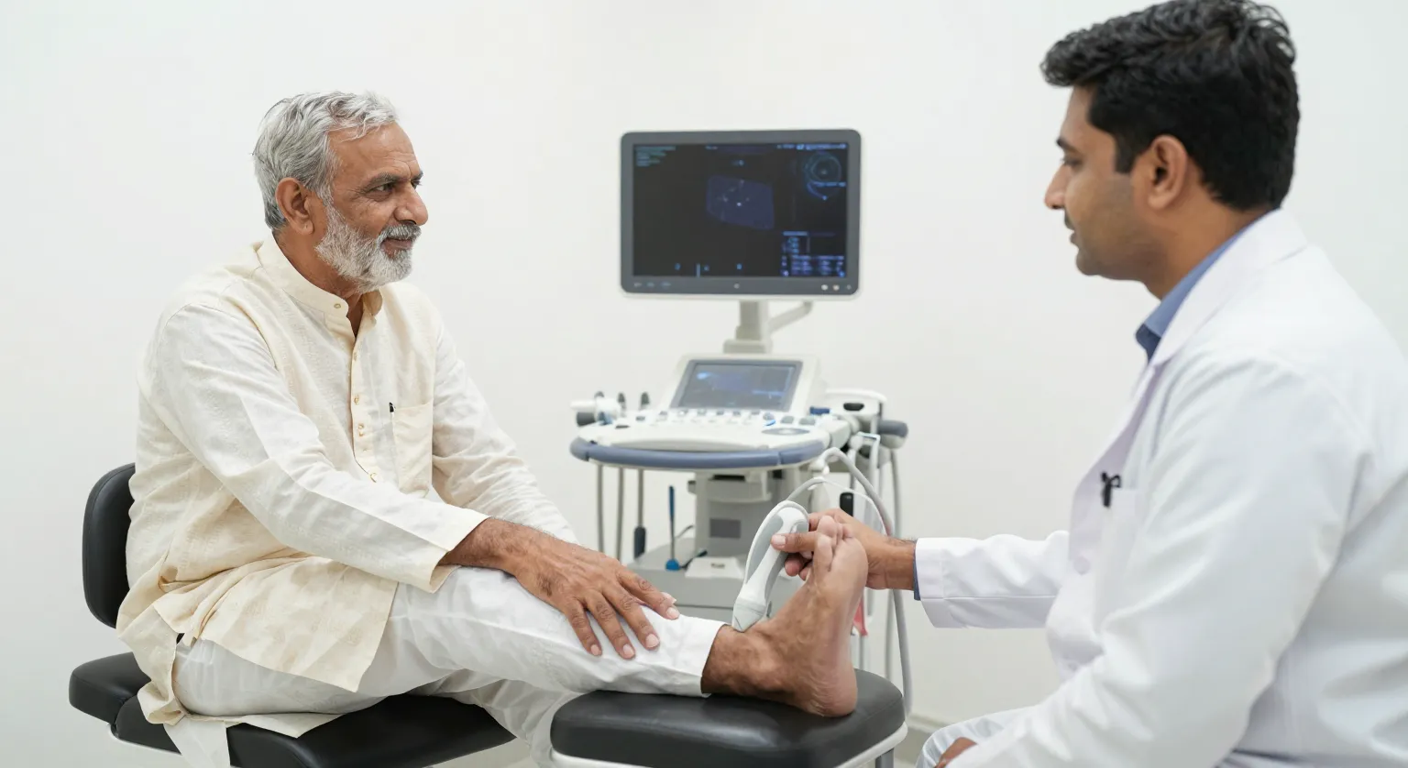
Limb salvage is a planned sequence rather than a single operation. Blood supply is restored, infected and dead tissue is removed, bone infection is cleared where present, and the remaining defect is covered with a graft or flap. Each stage depends on the one before it succeeding properly.
Limb salvage surgery is a staged treatment that restores circulation, removes infected and dead tissue, and reconstructs the resulting defect so that a threatened foot or leg is preserved with useful function instead of being amputated.
Function is the real goal, not merely keeping tissue attached. A salvaged foot must bear weight, fit into footwear and carry a patient through daily life. Where that outcome is genuinely impossible, an honest surgeon says so, since a well healed limited amputation serves a patient better than years of failed procedures.
Who needs limb salvage surgery?
Referrals arise mainly from diabetic foot complications, from peripheral artery disease, from severe infections such as gangrene and necrotising fasciitis, from crush injuries after road accidents, and from bone infection that has persisted despite repeated antibiotic courses. Long standing pressure sores over the heel occasionally reach the same stage.
Diabetes dominates this picture across Saurashtra. Neuropathy hides pain while narrowed arteries slow healing, so damage progresses silently. Research indexed on PubMed consistently links early specialist referral in diabetic foot disease with lower amputation rates, which is exactly why delay costs limbs.
How is suitability actually assessed?
Assessment answers three questions in order. Can blood flow reach the foot, either already or after angioplasty? Can infection be completely cleared with surgery and targeted antibiotics? Will the salvaged limb walk usefully afterwards? Three yes answers make salvage the right choice.
Investigations stay focused on those questions. Doppler and angiography map arterial blockages, deep tissue and bone cultures identify the true organisms, MRI defines how far infection extends into bone, and blood work covers sugar control, haemoglobin, protein and kidney function. General fitness for anaesthesia is reviewed alongside, because staged surgery demands reasonable reserves.
The techniques used in limb salvage
- Angioplasty or bypass: narrowed leg arteries are opened or bypassed so oxygenated blood reaches the wound, which every later step depends upon.
- Serial debridement: dead and infected tissue is removed across one or more sittings until only healthy bleeding tissue remains.
- Bone clearance: infected bone is resected to healthy margins, with deep samples cultured to direct the antibiotic course.
- Negative pressure therapy: vacuum dressings reduce swelling, control fluid and encourage granulation between surgical stages.
- Skin grafting: a thin graft resurfaces a clean granulating wound quickly, which suits broad shallow defects well.
- Flap reconstruction: local or free flaps bring skin, fat and blood supply into areas where bone or tendon lies exposed.
- Minor amputation: sacrificing a single toe or ray preserves the rest of the foot and normal walking, which is a very different outcome from major amputation.
Reconstructive outcomes across grafting and flap cases appear in the before and after gallery, and patient explanations are also shared on the clinic YouTube channel.
How Limb Salvage Surgery in Jetpur is delivered
- Urgent stabilisation: spreading infection is controlled first, with drainage of pus, intravenous antibiotics and correction of blood sugar.
- Circulation mapping: Doppler and angiography identify blockages, and angioplasty is arranged before any reconstructive planning proceeds.
- Staged debridement: dead tissue and infected bone are cleared over one or more procedures until margins are healthy.
- Wound bed preparation: vacuum therapy and dressings develop a clean granulating surface ready to accept a graft or flap.
- Definitive reconstruction: grafting or flap cover closes the defect with living tissue, restoring a durable walking surface.
- Rehabilitation and protection: offloading footwear, physiotherapy and scheduled reviews protect the salvaged limb long term.
When is a second opinion worth seeking?
Seek one whenever amputation is advised without a Doppler or angiogram having been done, when only surface swabs have guided antibiotics, when no reconstructive surgeon has examined the wound, or when the recommendation followed a brief consultation rather than proper imaging and culture results.
Speed still matters more than perfection. Spreading infection and severe pain both warrant immediate care wherever you are, so stabilisation should never wait for a distant appointment. Once the situation is stable, however, a considered reconstructive opinion frequently changes the plan substantially.
Travelling to Surat from Jetpur
Elegance Clinic operates only at Adajan and Vesu in Surat, and no branch, camp or visiting centre exists in Jetpur. Being clear about that helps families plan realistically. Jetpur lies roughly six to seven hours away by road, therefore one organised visit with all reports in hand beats several short trips.
Local hospitals handle emergencies, drainage and initial antibiotics competently, so travel is worth considering in specific situations: an amputation recommendation the family wants reviewed, a wound exposing bone or tendon, repeated infection at the same site, or a limb that has not improved despite weeks of treatment. The outstation patients guide covers scheduling, reports and accommodation, while angiography films, culture reports and wound photographs shared through the clinic contact page let much of the planning happen before arrival. Later reviews continue by video, with dressings performed close to home.
What does limb salvage cost?
Cost reflects how many stages the limb needs. A single debridement with a skin graft sits at the lower end, whereas angioplasty followed by repeated clearance, prolonged intravenous antibiotics and free flap reconstruction costs considerably more. Hospital stay, imaging and diabetes management all contribute to the final figure.
A written estimate is issued after assessment, covering investigations, each planned procedure, medicines, dressings and follow up. Since treatment often spans six to eight weeks, instalment plans help families manage the sequence without interrupting care, and the EMI and financing guide explains those arrangements clearly.
Myths that cost patients their limbs
- Blackened tissue does not always mean the whole foot is lost, because dead skin can overlie healthy tissue underneath.
- Antibiotics alone cannot rescue a threatened limb when arteries are blocked or dead tissue remains in place.
- Amputation is not the safer default, given that most limbs with restorable circulation can be salvaged.
- Removing one toe does not weaken the entire foot, and it frequently prevents a much larger amputation.
- Age alone does not rule out salvage, since general fitness and circulation matter far more than the birth date.
Recovery and long term aftercare
Recovery follows the number of stages performed. Grafts settle within two to three weeks, flaps need closer monitoring during the first days, and protected walking usually begins with special footwear well before full healing completes. Physiotherapy restores strength and balance gradually.
Protecting the salvaged limb becomes lifelong work. Keep blood sugar within target, inspect the foot daily using a mirror for the sole, wear prescribed offloading footwear consistently, and attend reviews even when everything feels fine. Should fresh discharge, swelling or discolouration appear, prompt review through online consultation booking protects the result already achieved.
Why patients choose Elegance Clinic
Families choose Elegance Clinic because debridement, bone clearance and reconstruction sit with one plastic surgeon inside a single plan rather than being split between departments. Dr. Ashutosh Shah brings over twenty two years of reconstructive experience across skin grafting, local and free flap surgery, wound management and diabetic foot salvage, so decisions come from long practice with difficult limbs.
Anyone considering Limb Salvage Surgery in Jetpur should ask two questions of any treating team before accepting amputation. Ask whether arterial circulation has been formally tested, and ask whether a reconstructive surgeon has examined the wound in person. Those two answers frequently change what happens next.
FAQs
Can a limb still be saved once tissue has turned black?
Often yes. Blackened skin may sit over healthy tissue beneath, and the true extent becomes clear only after circulation testing and surgical assessment. Salvage remains possible whenever blood flow can be restored to the area.
How long does the whole treatment take?
Most patients need six to twelve weeks from first assessment to a healed limb. Cases requiring angioplasty, several debridements and flap reconstruction take longer, while a straightforward graft after one clearance finishes considerably sooner.
Is salvage always better than amputation?
Not universally. A salvaged limb must walk usefully and stay durable, so when circulation cannot be restored or the foot would never bear weight, a well planned limited amputation gives better function and quality of life.
Will I be able to walk normally afterwards?
Many patients do, particularly when only soft tissue and a toe were involved. Larger reconstructions may need custom footwear or insoles, though independent walking without assistance remains the usual goal and the usual outcome.
Is diabetes a barrier to this surgery?
Diabetes makes healing harder yet rarely prevents treatment. Controlled blood sugar before and after surgery improves results markedly, so glucose management runs alongside the surgical plan throughout the entire recovery period.
How urgent is the decision?
Spreading infection, fever or rapidly darkening tissue require care within hours, not days. Stable long standing wounds allow time for proper assessment, though every week of delay reduces the tissue available for reconstruction.
Does insurance usually cover this treatment?
Reconstructive surgery for infection, trauma or diabetic complications is generally considered medically necessary, so many policies contribute. Coverage varies between insurers, therefore checking the policy and obtaining pre authorisation before admission is always advisable.
Can dressings continue near my home afterwards?
Usually yes. Routine dressings are handled locally while photographs and reports are reviewed by video. Return visits are reserved for procedures, graft checks or reassessment when progress unexpectedly slows.
Ready to discuss your concern in person? Book a private consultation at our Adajan or Vesu clinic. Call +91 83205 00350 or use the Book Consultation button.