
Leg Ulcer Treatment in Jamnagar: When a Wound Refuses to Heal
Key Takeaways
- A leg ulcer that stays open beyond two to three weeks despite dressings is a non healing ulcer and needs specialist assessment.
- The common hidden causes are diabetes, poor blood circulation, vein problems and untreated infection.
- Debridement, advanced dressings and skin grafting close most long standing leg ulcers.
- Treatment cost depends on the ulcer's depth and cause, so an examination based estimate is the only honest one.
- Patients from Jamnagar can complete assessment, treatment and the first review in one planned Surat visit.
Leg ulcer treatment in Jamnagar usually starts with dressings at a local clinic, and for a fresh wound that is often enough. However, when a leg ulcer stays open beyond two or three weeks despite regular dressing, it has become a non healing leg ulcer, and it now needs a specialist who can find the reason behind it rather than just covering it.
Consequently, many families from Jamnagar, Khambhalia and Dwarka reach us in Surat after months of dressings that never ended. This guide explains why a leg ulcer refuses to heal, which treatments actually close it, what the treatment costs, and how patients from Jamnagar plan the visit in a single trip.
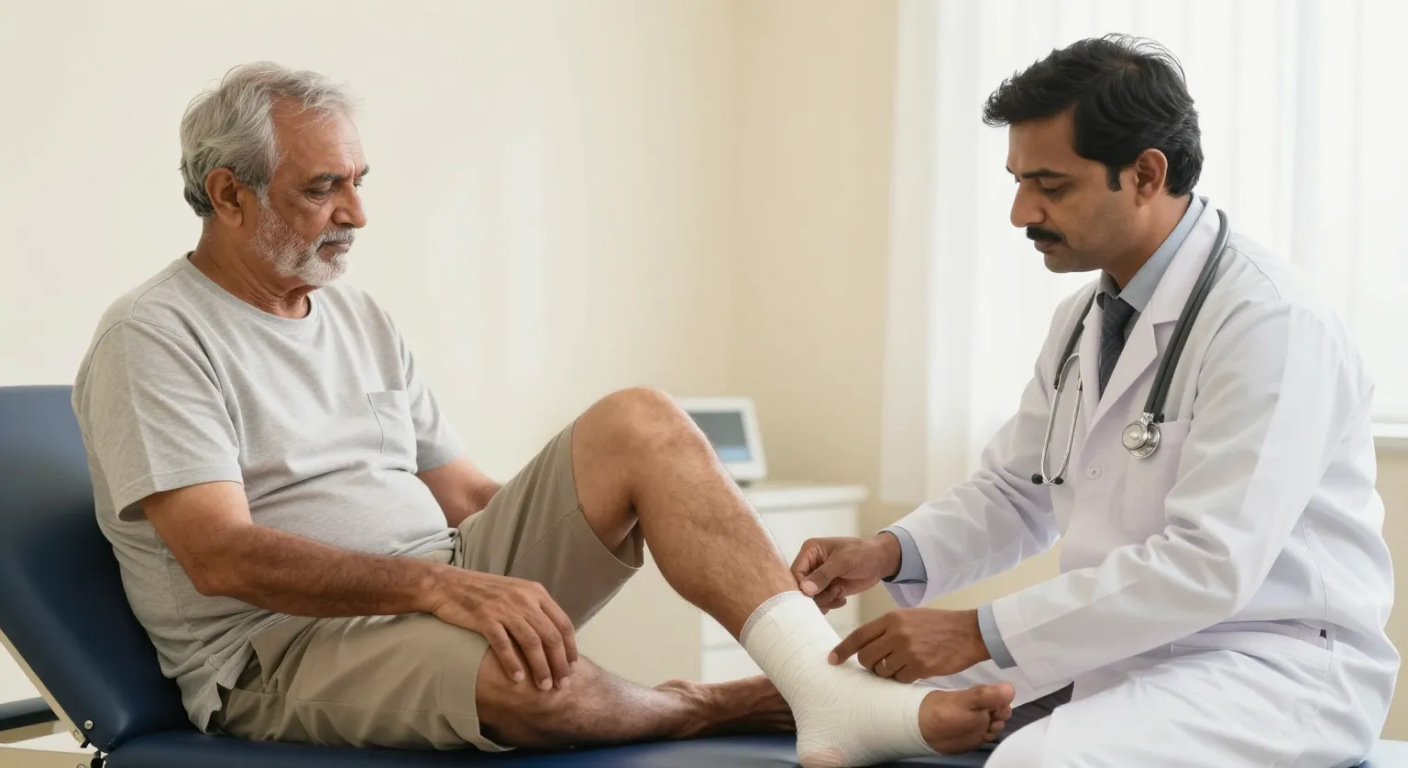
What Is a Non Healing Leg Ulcer?
A non healing leg ulcer is an open wound on the leg or foot that fails to close within two to three weeks despite clean dressings. It signals a hidden problem, usually diabetes, poor circulation, vein disease or deep infection, and leg ulcer treatment in Jamnagar or anywhere else succeeds only when that hidden cause is found and treated.
Non healing leg ulcer: An open wound on the leg that remains unhealed for more than two to three weeks because an underlying medical cause keeps interrupting the healing process.
Therefore, the first specialist step is never another dressing. It is a proper assessment of blood supply, sugar control, infection depth and the tissue inside the wound.
Why Does a Leg Ulcer Refuse to Heal?
A leg ulcer refuses to heal for four common reasons, uncontrolled diabetes, narrowed arteries reducing blood supply, weak leg veins causing constant swelling, and infection living deep inside the wound. Each of these blocks the body's natural repair, so the ulcer stays open no matter how regularly it is dressed.
Additionally, repeated pressure on the same spot, smoking and poor nutrition slow healing further. According to the World Health Organization, diabetes prevalence continues to rise worldwide, and diabetic foot and leg wounds remain among its most serious complications, which is why WHO recommends regular foot checks for every diabetic patient.
Which Treatments Actually Work?
Modern wound care offers three treatments that close most long standing ulcers. The right choice depends on the wound's depth, infection and blood supply.
Advanced dressings and infection control
Moist healing dressings, chosen for the wound's stage, keep the tissue in the best environment to repair. Meanwhile, targeted antibiotics clear the infection that ordinary dressings leave behind.
Debridement
Dead and unhealthy tissue is removed from the wound in a short, painless procedure. As a result, fresh tissue gets room to grow, and healing that was stuck for months often restarts within days.
Skin grafting
For large or deep ulcers, a thin layer of the patient's own skin is placed over the clean wound. This is a core plastic surgery skill, and our results gallery includes real skin grafting and diabetic foot care cases treated at the clinic.
How Is the Treatment Done?
The full pathway is simpler than most patients expect, and it usually fits into a single planned visit.
- Assessment. The surgeon examines the ulcer, checks circulation and sugar, and identifies the reason healing stopped.
- Wound preparation. Debridement removes dead tissue, and infection is treated with the right medicines.
- Closure. Depending on the wound, advanced dressings or a skin graft close the ulcer.
- Protected recovery. Offloading footwear and a dressing schedule protect the new tissue while it strengthens.
Who Needs Specialist Care?
Anyone whose leg wound has stayed open beyond three weeks needs specialist care. Moreover, diabetic patients, patients with blackened skin around the wound, foul smell, pus, fever, or an ulcer that keeps returning at the same spot should not wait even that long. These signs mean the wound is deepening, and home dressing alone cannot reverse that.
On the other hand, a fresh, shallow wound in a healthy person usually heals with clean home care, so not every wound needs a specialist. The two week mark is the honest dividing line.
Cost of Leg Ulcer Treatment
The cost of leg ulcer treatment in Jamnagar clinics or in Surat depends on the ulcer's depth, the infection present and whether skin grafting is needed. Simple dressing cycles cost little, whereas debridement and grafting cost more because they involve an operating room. Consequently, an exact figure is only honest after examination, and at our clinic the written estimate you receive stays fixed.
Furthermore, EMI and financing options are available for planned procedures. Months of repeated dressings that never close the wound often cost more in total than one definitive treatment, which is worth remembering when comparing prices.
Healing Time and Realistic Results
Honest timelines help patients plan. After debridement, a well prepared ulcer typically closes in four to eight weeks with proper dressings. After skin grafting, the new skin settles in about three weeks, and most patients walk normally within days using protective footwear.
Long standing ulcers of many months can still heal completely, however the older and deeper the wound, the longer the journey. Early treatment is the single biggest factor in a fast, complete result.
Common Myths
- The ulcer will close on its own one day. A wound open beyond weeks has a blocked healing process. Without treating the cause, it deepens instead of closing.
- Dressings alone are treatment. Dressings protect a wound, yet they cannot remove dead tissue or restore blood supply.
- No pain means no danger. Diabetic nerve damage silences pain while the ulcer worsens quietly.
- Surgery means amputation. The opposite is true. Research indexed on PubMed shows timely wound care and grafting significantly reduce amputation rates.
- Treatment in Surat means many trips. Assessment, procedure and first review fit into one planned visit, and later follow ups happen on video call.
Aftercare That Protects the Result
Aftercare decides whether the ulcer stays closed. Fortunately, it is simple.
- Follow the dressing schedule exactly as written at discharge
- Keep sugar firmly controlled, because healing depends on it
- Wear the advised offloading footwear so pressure never returns to the same spot
- Finish every prescribed medicine even after the wound looks better
- Send weekly photos on WhatsApp for review instead of travelling
Additionally, our care team stays reachable by phone throughout recovery, so small doubts are answered before they become setbacks.
Planning the Visit from Jamnagar
To be clear, our clinics are only at Adajan and Vesu in Surat, we have no branch in Jamnagar. Nevertheless, the journey is straightforward, Jamnagar to Surat is roughly a seven hour drive or an overnight train, and patients searching for leg ulcer treatment in Jamnagar often find that one well planned Surat visit ends a problem that months of local dressings could not. Share photographs of the ulcer on WhatsApp first, and a video consultation with Elegance Clinic confirms whether travelling is worthwhile before you book anything. The outstation patient guide explains the one visit plan, stay options and video follow ups, and treatment is performed personally by Dr. Ashutosh Shah, a senior plastic surgeon with more than 22 years of reconstructive experience.
FAQs
How long should a leg ulcer take to heal?
A fresh shallow wound should begin closing within two weeks with clean dressings. Beyond two to three weeks, it counts as a non healing ulcer and needs specialist assessment of the hidden cause.
How much does the treatment cost?
Cost depends on the ulcer's depth, infection and whether grafting is needed. A fixed written estimate is given after examination, and EMI options are available for planned procedures.
Is the treatment safe for elderly diabetic patients?
Yes. Sugar and fitness are checked first, anaesthesia is chosen accordingly, and the procedures themselves are short. Age alone is not a barrier to wound treatment.
Does debridement hurt?
No. It is done under local anaesthesia, so the procedure is painless. Mild soreness afterwards settles with simple prescribed medicines within days.
How many visits are needed?
Usually one. Assessment, wound preparation and closure fit into a single planned visit, and follow ups continue on video call with photographs from home.
What if the ulcer smells or leaks pus?
Smell and pus are infection signs, and infection spreads fast in a leg wound. Skip home remedies and get a specialist examination promptly.
Can a years old ulcer still heal?
Yes, in most cases. Once dead tissue is cleared, infection is controlled and the cause is treated, even long standing ulcers close, though healing takes longer than for fresh wounds.
When does amputation become necessary?
Only when tissue has died beyond saving, which is usually the result of long delay. Timely wound care and skin grafting prevent that outcome in the great majority of patients.
Ready to discuss your concern in person? Book a private consultation at our Adajan or Vesu clinic. Call +91 83205 00350 or use the Book Consultation button.