
Fungal Foot Infection Treatment in Dwarka: Itch, Cracks and Cure
Published: 11 August 2026 · Last Updated: August 2026
Key Takeaways
- Fungal foot infection begins between the toes, where trapped moisture creates ideal growing conditions.
- Thickened yellow nails usually mean the fungus has reached the nail plate, which needs longer treatment than skin does.
- Creams alone frequently fail, because treatment stopped too early allows the fungus to regrow within weeks.
- Cracked skin from fungus is a common entry point for cellulitis, particularly in people with diabetes.
- Footwear, drying habits and household spread matter as much as the medicine prescribed.
- Any diabetic patient with foot fungus should be checked for ulcers, since numb feet hide early damage.
Itching between the toes seems trivial until the skin splits and starts weeping. Fungal Foot Infection Treatment in Dwarka matters more than most people assume, because coastal humidity, closed footwear and long barefoot temple walks combine to keep fungus thriving all year. Left alone, a simple itch quietly becomes a crack, and that crack becomes a doorway for bacteria.
Patients consulting Dr. Ashutosh Shah often mention the same pattern. Creams from a local shop helped briefly, symptoms returned within weeks, and eventually the toenails thickened and turned yellow. Although the infection looks cosmetic, it changes the skin barrier completely. Since diabetes is common across Saurashtra, that broken barrier frequently leads to far bigger problems.
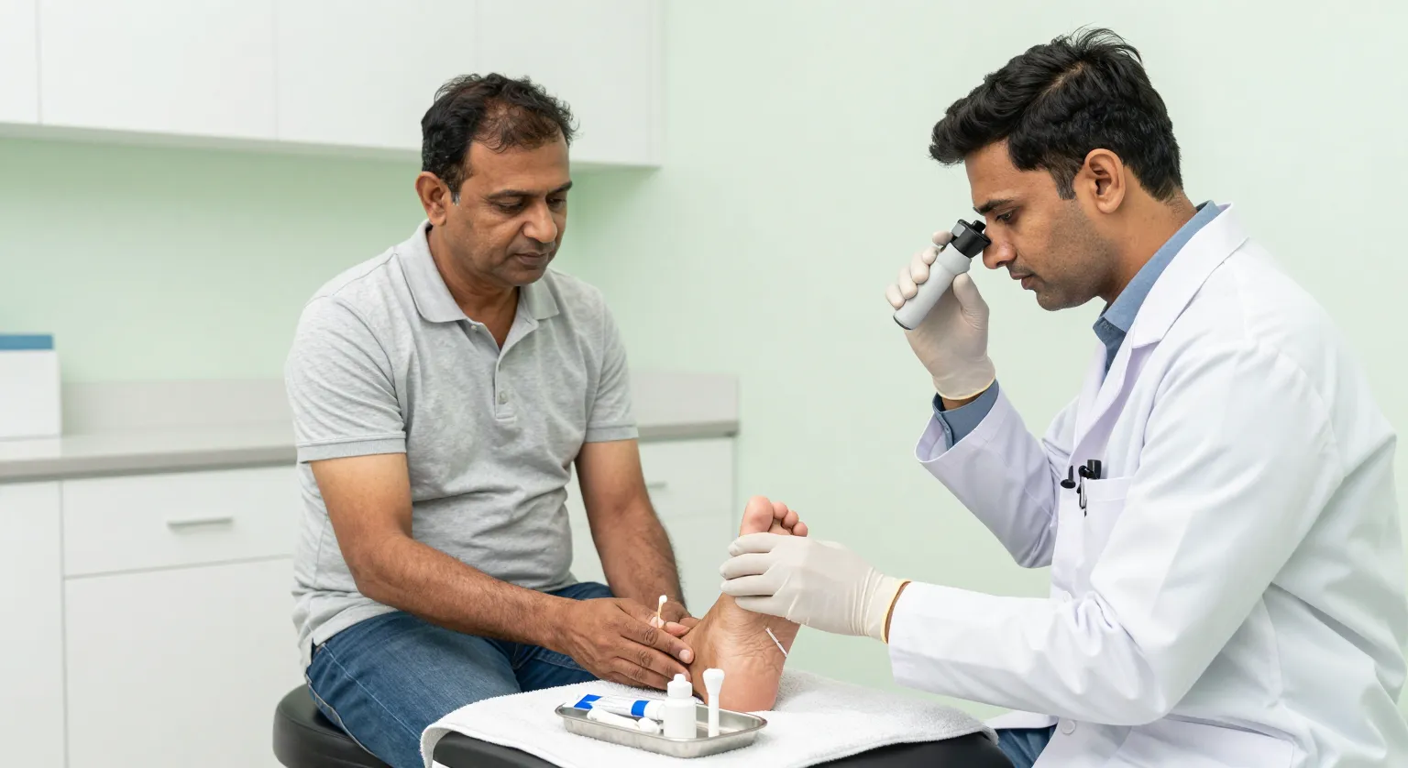
What is a fungal foot infection?
Fungal foot infection, known medically as tinea pedis, occurs when dermatophyte fungi grow within the outer layer of skin. Warmth and moisture feed them, therefore the web spaces between toes suffer first. Scaling, whitening, itching and a sour odour follow, and the same fungus later spreads to nails.
A fungal foot infection is an overgrowth of dermatophyte fungi in the skin or nails of the foot, causing itching, scaling, cracking and thickened discoloured nails that will not resolve without antifungal treatment.
Nail involvement carries a separate name, onychomycosis, and behaves differently. Skin responds within weeks, whereas an infected nail must grow out completely before it looks normal again. Toenails grow slowly, hence patience becomes part of the treatment plan.
Common patterns seen on the foot
- Between the toes: white soggy skin with peeling edges, most often affecting the gap beside the little toe.
- Moccasin pattern: dry, thickened, scaly skin across the sole and heel, frequently mistaken for ordinary dryness.
- Blistering type: small itchy blisters on the arch or side of the foot, which sting sharply when they burst.
- Nail infection: yellow or brown thickening with crumbling edges, sometimes lifting the nail away from its bed.
- Combined infection: fungus plus bacteria, producing pain, foul smell and surrounding redness that needs prompt medical care.
Why do fungal foot infections keep coming back?
Recurrence usually reflects incomplete treatment rather than resistant fungus. Creams get stopped once itching settles, although fungal spores survive in the deeper skin layers for weeks afterwards. Additionally, untreated nails act as a permanent reservoir, reinfecting the skin repeatedly, while shared bathroom floors and unwashed footwear keep the household cycle running.
Research indexed on PubMed consistently links nail fungus to increasing age, diabetes and repeated skin infection, which explains why the same patients return with the same complaint. Treating skin while ignoring nails almost guarantees a rerun.
Coastal life around Dwarka adds its own pressures. Sea moisture, sandy grit and long barefoot stretches on temple premises expose feet constantly, and closed shoes worn over damp feet finish the job by trapping warmth against the skin.
When does a fungal foot infection become dangerous?
Danger appears once cracked skin allows bacteria inside. Redness spreading up the foot, warmth, swelling, pain or fever suggests cellulitis, which needs antibiotics urgently. Diabetic patients face higher stakes still, because numbness hides the early wound and reduced circulation slows healing, allowing a minor split to become an ulcer.
Pus, dark tissue or a wound that deepens over days moves the situation into surgical territory. Assessment then covers blood supply and infection depth rather than antifungal choice alone.
Treatment options that genuinely work
- Topical antifungals: creams, powders and sprays clear most skin infections, provided application continues for two weeks beyond symptom relief.
- Oral antifungal tablets: prescribed for nail infection or extensive skin involvement, with liver function checked when courses run long.
- Nail debridement: thinning or partly removing a diseased nail reduces fungal load and helps medicine reach the nail bed.
- Combined bacterial cover: antibiotics are added whenever redness, pain or discharge indicates secondary infection alongside the fungus.
- Moisture control: antifungal powders, breathable footwear and thorough drying prevent the environment that allowed growth initially.
- Household decontamination: footwear treatment and separate towels stop the endless reinfection cycle within families.
Skin conditions frequently mimic fungus, so accurate diagnosis saves months of wasted treatment. Eczema, psoriasis and contact dermatitis all cause scaling, and each is managed differently through clinical dermatology care.
How Fungal Foot Infection Treatment in Dwarka Patients Is Planned
- Clinical examination: web spaces, soles, nails and both feet are inspected, since one sided scaling often suggests a different diagnosis.
- Confirming the organism: skin scraping or nail clipping testing is used when nails are involved or previous treatment failed.
- Choosing the route: topical treatment suits skin alone, whereas nail infection usually requires oral medicine over several months.
- Treating the reservoir: affected nails are thinned or debrided so the fungal load drops and medicines penetrate properly.
- Environment correction: footwear, socks, drying routine and household sharing habits are reviewed and changed together.
- Review and clearance: progress is checked at intervals, and treatment continues past symptom relief to prevent early recurrence.
Fungal infection when you also have diabetes
Diabetic feet deserve a stricter approach. Every fungal infection gets treated as a wound risk, not a cosmetic nuisance, because a crack between numb toes can become an ulcer without any pain to announce it. Regular inspection therefore becomes essential alongside the antifungal course.
Nail cutting needs professional hands too. Thickened fungal nails are difficult to trim safely, and a small nick in a numb foot with poor circulation heals badly. Healed wound outcomes across similar cases appear in the before and after gallery.
Should Dwarka patients travel to Surat?
Straightforward skin fungus rarely justifies a long journey, since local physicians manage it competently. Travel becomes sensible when nails are extensively involved, when infections keep returning despite correct treatment, when diabetes complicates the picture, or when a wound has already formed and needs surgical assessment.
Dwarka lies roughly six hundred kilometres from Surat by road, therefore one planned visit covering examination, testing and a complete treatment plan works better than repeated trips. Consultations happen at Adajan and Vesu in Surat only, with no branch anywhere in Saurashtra. Arrangements for travel, testing and remote follow up are explained in the outstation patient guide.
What does treatment cost?
Skin infection treatment stays inexpensive, involving a consultation and a few weeks of topical medicine. Nail infection costs more, mainly because oral courses run for three to six months and periodic blood tests accompany them. Debridement or minor nail procedures add modestly to the total.
Estimates follow examination, since nail count and infection extent change the plan considerably. Where treatment extends into surgical wound care, payment across instalments is possible, and the EMI and financing guide covers how those arrangements work.
Myths worth discarding
- Fungal infection is not caused by poor hygiene alone, given that humidity and closed footwear matter far more.
- Stopping cream once itching settles does not complete treatment, because fungus survives well beyond symptom relief.
- Kerosene, bleach and undiluted antiseptics damage skin badly, therefore they worsen cracking rather than curing anything.
- Nail fungus does not clear in two weeks, since a toenail needs many months to grow out fully.
- Only unclean feet get infected is untrue, as swimmers, athletes and temple visitors catch it from shared wet floors.
Habits that prevent recurrence
Dry between every toe after bathing, ideally with a separate towel used only for feet. Rotate footwear so each pair dries completely, choose cotton socks and change them daily, and apply antifungal powder inside shoes during humid months. Slippers in shared bathrooms prevent both catching and spreading the infection.
Treat the whole household when several members show symptoms, otherwise reinfection continues indefinitely. Inspect nails monthly for early yellowing, keep feet away from prolonged dampness, and seek review promptly whenever redness, swelling or a crack appears rather than waiting for it to settle on its own.
Why patients choose Elegance Clinic
Accurate diagnosis is the real value here, because many stubborn foot rashes are not fungal at all. Elegance Clinic combines dermatological assessment with surgical wound expertise, which helps when infection has already damaged skin or reached a diabetic foot. The clinical background of Dr. Ashutosh Shah spans more than twenty two years of reconstructive and aesthetic practice.
Anyone planning Fungal Foot Infection Treatment in Dwarka should carry two things to the consultation. Carry a list of creams and tablets already tried, plus recent sugar reports if diabetes is present, since both change the plan immediately. Appointments can be arranged through online consultation booking.
FAQs
How long does a fungal foot infection take to clear?
Skin infections usually settle within two to four weeks of consistent antifungal use. Nail infections take far longer, commonly three to six months of oral treatment, followed by several more months while the healthy nail grows out.
Can a fungal foot infection spread to other people?
Transmission happens easily through shared bathroom floors, towels, socks and footwear. Wearing slippers in communal wet areas, using a separate foot towel and avoiding shared shoes reduce household spread considerably during active treatment.
Why do my toenails stay yellow after treatment?
Damaged nail material cannot repair itself, therefore discolouration persists until new nail replaces it entirely. Toenails grow roughly one millimetre monthly, so full cosmetic improvement often appears nine to twelve months after successful treatment.
Is nail fungus dangerous for diabetic patients?
Thickened fungal nails press against surrounding skin and can create pressure wounds in numb feet. Because sensation is reduced, those wounds go unnoticed and may develop into ulcers, so professional nail care becomes genuinely important.
Do home remedies work for foot fungus?
Vinegar soaks, garlic pastes and kerosene applications lack reliable evidence and frequently irritate already damaged skin. Proven antifungal medicines work faster and safer, particularly when the infection extends into nails or between multiple toe spaces.
Can the infection return after complete treatment?
Recurrence is common when footwear stays damp, nails remain untreated or household members carry the fungus. Consistent drying habits, breathable shoes, antifungal powder and treating every affected person together keep the recurrence risk considerably lower.
When should I see a doctor rather than buy a cream?
Seek medical review when nails are involved, when redness spreads, when pain or discharge appears, when diabetes is present, or when two weeks of over the counter treatment produced no visible improvement whatsoever.
Ready to discuss your concern in person? Book a private consultation at our Adajan or Vesu clinic. Call +91 83205 00350 or use the Book Consultation button.