
Expert Foot Ulcer Treatment in Dwarka: What Actually Works
Key Takeaways
- A foot ulcer that has not shrunk in four weeks needs reassessment rather than another dressing change.
- Blood flow testing decides everything, because a poorly supplied foot cannot heal whatever is applied to it.
- Offloading pressure from the ulcer is as important as any medicine, yet it is the step most often skipped.
- Probing to bone suggests bone infection, which needs imaging and usually surgery rather than tablets alone.
- Most amputations follow an ulcer, therefore early specialist review is the single strongest protection.
- Elegance Clinic runs only at Adajan and Vesu in Surat, so coastal families plan one combined assessment visit.
A foot ulcer is not a wound that simply needs a better ointment. Expert Foot Ulcer Treatment in Dwarka starts by answering three questions: why the ulcer appeared, whether enough blood reaches the area, and what pressure keeps reopening it. Unless all three are addressed together, the wound closes briefly and returns within weeks.
Patients from Dwarka and the coastal Saurashtra belt often arrive at Dr. Ashutosh Shah after six months of dressings. Sugar levels were controlled, antibiotics were taken, powders and creams were tried faithfully. Nevertheless the ulcer stayed open, because nobody had checked circulation or corrected the walking pressure that created it in the first place.
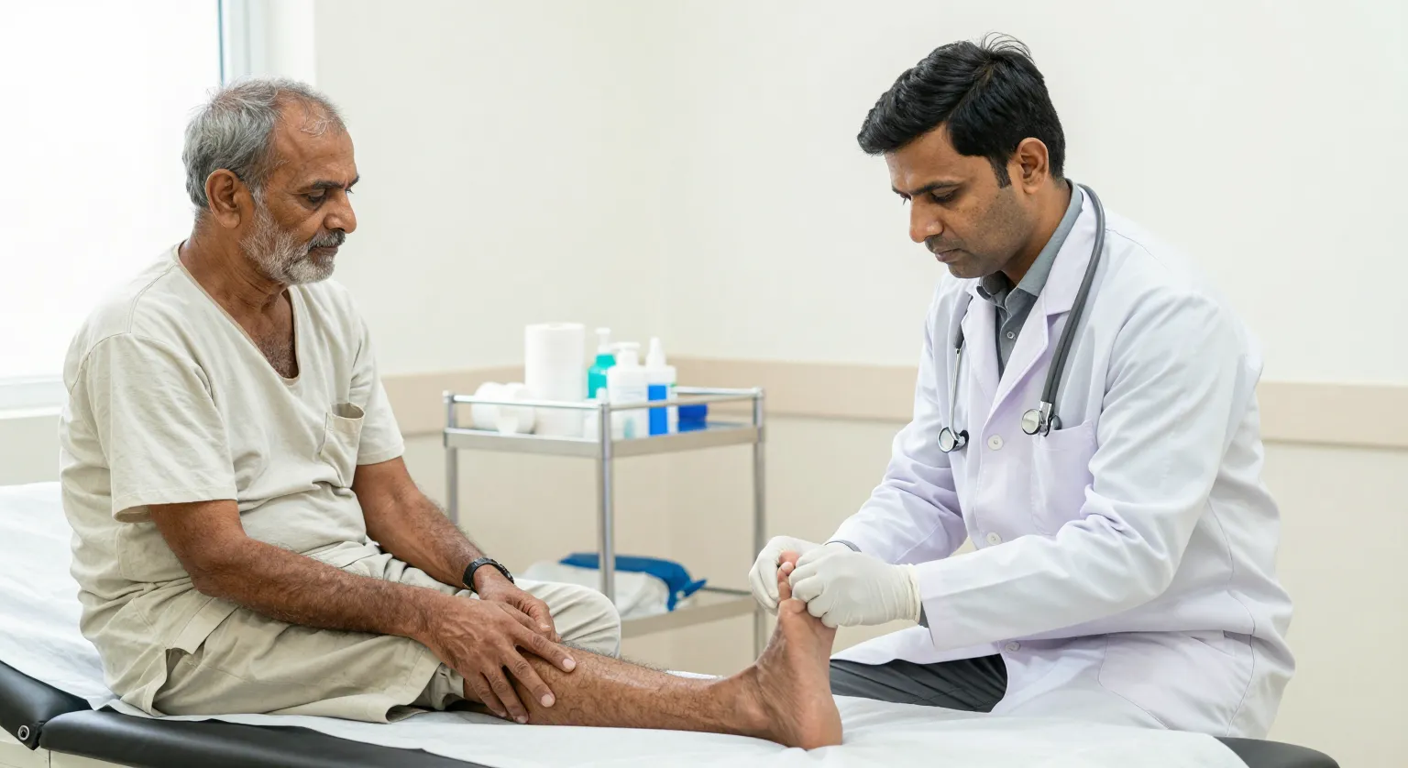
What exactly is a foot ulcer?
A foot ulcer is an open sore that reaches through the full thickness of skin, most often on the sole, heel or toes. Diabetes, nerve damage and poor circulation cause the majority. Because sensation is reduced, patients frequently feel nothing at all until a sock shows staining.
A foot ulcer is a full thickness break in the skin of the foot that fails to heal normally, usually because of nerve damage, reduced blood supply, repeated pressure or infection acting together.
Depth matters more than width. Shallow ulcers respond well to offloading and simple dressings, whereas an ulcer that probes down to tendon or bone signals a far more serious problem. Consequently the first examination should always include gentle probing rather than a glance from above.
Why do some foot ulcers refuse to heal?
Four reasons dominate. Poor arterial supply starves the wound of oxygen, ongoing pressure crushes new tissue with every step, hidden infection in bone keeps the area inflamed, and uncontrolled sugar slows repair at cellular level. Addressing one while ignoring the others explains most treatment failures patients describe.
The World Health Organization highlights diabetes as a rapidly growing global health burden, with foot complications ranking among its most disabling consequences. Detailed information on diabetes and its complications is published by the World Health Organization, and prevention advice there mirrors what long term wound clinics see daily.
Which warning signs mean you should not wait?
Seek review urgently if the ulcer smells offensive, discharges pus, spreads redness up the foot, or turns black at the edges. Fever, sudden swelling, rising sugar readings and new pain in a previously numb foot all count as red flags. Waiting a week in these situations frequently costs toes.
- Blackening skin: tissue death has begun, therefore assessment within days rather than weeks is essential.
- Probing to bone: a wound that touches bone strongly suggests osteomyelitis and needs imaging.
- Spreading redness: cellulitis moving up the foot or leg indicates infection escaping the wound.
- Cold, pale foot: weak pulses point to arterial disease, which must be corrected before healing can begin.
How Expert Foot Ulcer Treatment in Dwarka Patients Usually Proceeds
- Full assessment: wound depth, pulses, sensation testing and Doppler study establish whether the foot has enough circulation to heal.
- Infection control: deep tissue culture guides antibiotics, while X ray or MRI checks whether bone is involved.
- Debridement: dead tissue and thick callus are removed surgically, since living tissue cannot advance under a dead roof.
- Restoring blood flow: angioplasty or bypass is arranged when arterial testing shows significant narrowing.
- Offloading: a cast, boot or custom insole removes pressure from the ulcer during every step taken.
- Closure planning: once clean and granulating, larger wounds are closed with a graft or flap instead of waiting indefinitely.
When does an ulcer need surgery?
Surgery is needed when dead tissue must be removed, when pus is trapped deep in the foot, when infected bone requires clearing, or when a clean wound is simply too large to close on its own. Reconstruction with a graft or flap then shortens healing from months to weeks.
Toe or partial foot amputation occasionally becomes unavoidable, though a limited, well planned removal usually preserves walking. Videos and explanations of wound reconstruction are shared on the clinic YouTube channel, and healed cases appear in the before and after gallery.
Offloading, the step everyone skips
Walking normally on an ulcer applies several times body weight to the exact spot that needs rest. Dressings cannot overcome that force, therefore healing stalls no matter how modern the product. Total contact casts, removable boots and custom insoles all redistribute pressure away from the wound.
Compliance matters enormously here. Patients who wear the device only outdoors continue damaging the wound indoors, where most steps actually happen. Strict use for a few weeks often achieves what months of dressings could not.
Should Dwarka patients travel to Surat?
Straightforward ulcers with good pulses heal locally, so routine travel makes no sense. Referral becomes worthwhile once a wound has stalled beyond a month, when bone is exposed or probed, when circulation has never been tested, or when amputation has been advised without vascular assessment.
Dwarka lies roughly six hundred kilometres from Surat, therefore families plan one visit covering testing, debridement and a clear plan rather than repeated trips. Clinics operate at Adajan and Vesu in Surat only, with no branch in Saurashtra. Travel planning, stay options and video follow up are set out in the outstation patient guide.
What does treatment cost?
Cost depends on wound size, number of debridements, whether vascular intervention is needed, dressing type and admission length. A shallow ulcer managed with offloading and dressings costs modestly, whereas deep infection with bone involvement and reconstruction naturally costs considerably more.
Estimates follow examination and investigation rather than a phone description, because photographs hide depth completely. Since diabetic wound care is medically necessary, insurance often contributes, and instalment options are described in the EMI and financing guide.
Myths worth discarding
- Ulcers do not heal faster when left open to air, given that a moist protected wound bed repairs better.
- Antibiotics alone rarely cure a foot ulcer, because dead tissue and pressure remain untouched by tablets.
- Painless ulcers are not harmless, since absent sensation usually means nerve damage and greater danger.
- Home remedies applied to open wounds frequently delay care and introduce infection rather than helping.
- Amputation is not inevitable, as most limbs are saved when circulation and infection are addressed early.
Aftercare and preventing recurrence
Inspect both feet daily, including between toes and under the heel, using a mirror where reach is difficult. Wash and dry carefully, moisturise dry skin while avoiding the spaces between toes, and never walk barefoot indoors. Small habits prevent most repeat ulcers far more reliably than any dressing.
Wear the prescribed footwear consistently, replace worn insoles on schedule, and have calluses trimmed professionally rather than cut at home. Keep sugar readings within target, attend foot review appointments, and report any new blister, colour change or crack immediately instead of watching it for a week.
Why patients choose Elegance Clinic
Wound care works best when one surgeon controls debridement, circulation decisions, offloading and reconstruction together. Elegance Clinic keeps all of those under a single plan, and Dr. Ashutosh Shah brings more than twenty two years of reconstructive surgical experience to limb salvage decisions. Consultations run at Adajan and Vesu in Surat.
Anyone comparing options for Expert Foot Ulcer Treatment in Dwarka should ask one practical question first. Ask whether arterial flow to the foot has actually been measured, because dressings applied to an ischaemic foot waste months that a limb cannot spare. Assessment can be arranged through the clinic contact page or by using online consultation booking.
FAQs
How long does a foot ulcer take to heal?
Shallow ulcers with good circulation often close within six to twelve weeks under proper offloading. Deeper wounds involving infection or poor blood supply take considerably longer, and some need surgical closure to finish healing.
Can a foot ulcer heal without surgery?
Many do, provided blood supply is adequate, infection is controlled and pressure is genuinely removed. Surgery becomes necessary when dead tissue, trapped pus, infected bone or a very large defect blocks natural healing.
Is a painless ulcer less serious?
No, painless ulcers are often more dangerous. Absent pain usually indicates nerve damage, which means injuries go unnoticed and patients keep walking on the wound, allowing infection to spread deeper before anyone notices.
Should the wound be kept dry or moist?
Modern wound care favours a moist, protected environment, since that supports new tissue growth. Soaking or leaving a wound wet is different and harmful, so dressing selection should always follow professional assessment.
Does high blood sugar stop healing?
Persistently high readings impair white cell function and slow tissue repair measurably. Healing improves noticeably once control tightens, which is why sugar management runs alongside wound treatment rather than after it.
Will the ulcer come back after healing?
Recurrence is common when the original pressure point or circulation problem remains uncorrected. Correct footwear, regular foot review and prompt attention to new blisters together reduce that risk substantially over the following years.
Can I walk normally during treatment?
Walking without offloading directly delays healing. A cast, boot or custom insole allows limited movement while protecting the wound, and following those instructions indoors matters just as much as outdoors.
Ready to discuss your concern in person? Book a private consultation at our Adajan or Vesu clinic. Call +91 83205 00350 or use the Book Consultation button.