
Diabetic Foot Care in Dwarka: The Routine That Prevents Amputation
Published: 11 August 2026 · Last Updated: August 2026
Key Takeaways
- Loss of protective sensation is the single strongest predictor of a future diabetic foot ulcer.
- Daily foot inspection, including between the toes and under the heel, catches problems while they remain trivial.
- Footwear causes most diabetic foot injuries, so shoe checks matter as much as sugar checks.
- Callus is not harmless, because pressure builds underneath it and eventually breaks the skin from within.
- Anyone with previous ulcers, deformity or weak pulses needs professional review every three to six months.
- Never treat corns, cracks or nails at home with blades, chemicals or hot water in a numb foot.
Good feet rarely make news, and that is precisely the problem. Diabetic Foot Care in Dwarka is usually treated as an afterthought until a wound appears, even though almost every serious diabetic foot complication starts with something small that nobody examined. Ten quiet minutes each evening genuinely prevent more amputations than any single medicine does.
Families who consult Dr. Ashutosh Shah frequently say the same sentence, namely that nothing hurt. Nerve damage steals warning pain first, therefore a stone inside a sandal, a hot floor or a tight strap causes injury without any protest from the foot. Because sugar levels also slow healing, that silent injury then lingers for weeks.
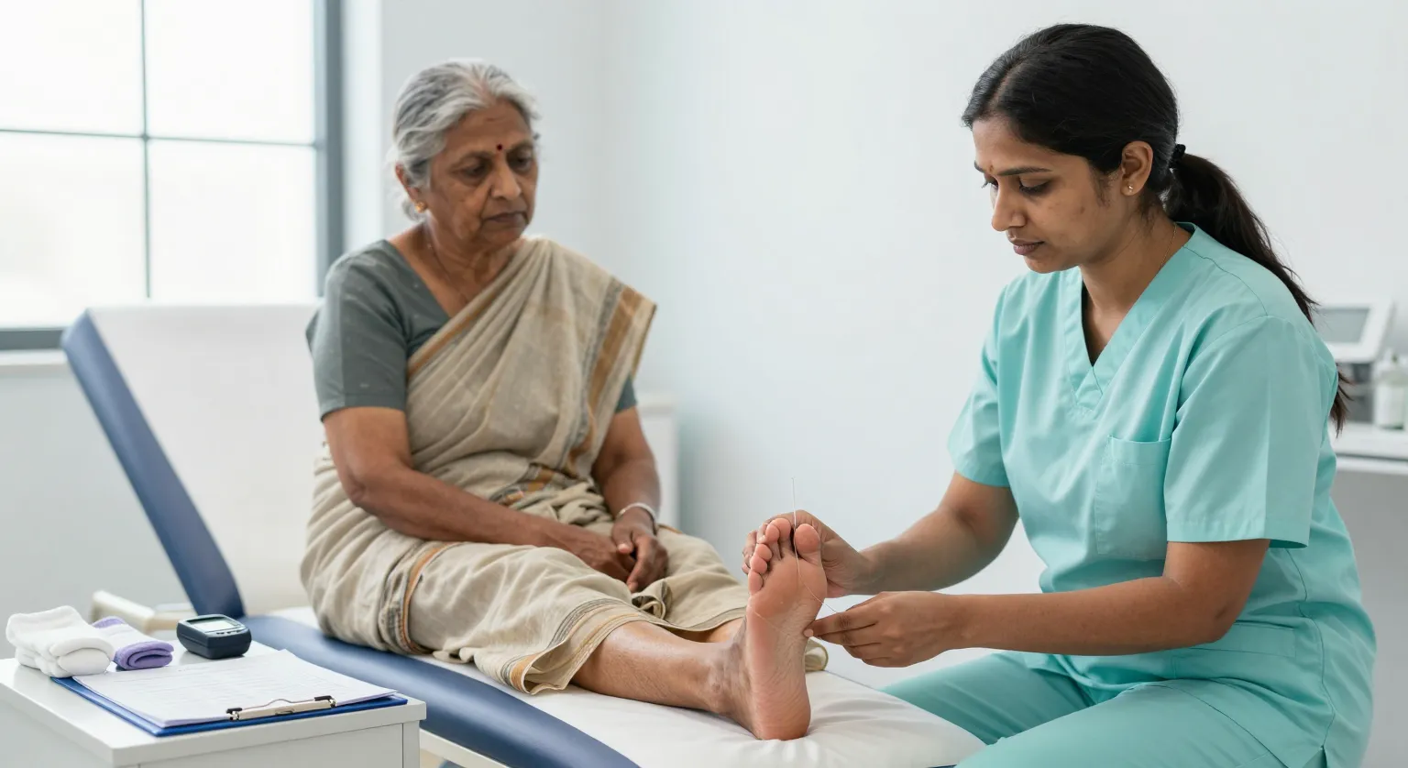
What does diabetic foot care actually involve?
Diabetic foot care combines daily self inspection, sensible footwear, professional nail and callus management, regular sensation testing and prompt review of any new change. Sugar control supports all of it. Together these measures protect skin that no longer warns its owner when something goes wrong underneath it.
Diabetic foot care is the routine prevention, examination and protection of feet affected by diabetic nerve damage and reduced circulation, aimed at stopping ulcers, infections and amputations before they begin.
Prevention sounds unglamorous next to surgery, yet the arithmetic favours it heavily. A pair of proper insoles costs a fraction of one hospital admission, and ten minutes of evening inspection costs nothing whatsoever.
Who faces the highest risk?
- Reduced sensation: anyone unable to feel light touch on the sole has already lost the body's natural injury alarm.
- Weak foot pulses: poor circulation means small wounds heal slowly, therefore minor injuries turn into major ones.
- Previous ulcer or amputation: recurrence risk stays high for years, so this group needs the closest monitoring of all.
- Foot deformity: hammer toes, bunions and collapsed arches concentrate pressure at specific points where skin eventually breaks.
- Long diabetes duration: nerve and vessel damage accumulate quietly with time, particularly when control has been inconsistent.
- Smoking and kidney disease: both reduce healing capacity considerably, and both appear repeatedly among patients who lose toes.
The World Health Organization highlights diabetes as a leading cause of lower limb amputation globally, with foot ulcers preceding most of them. Identifying the high risk foot early therefore changes outcomes far more than reacting to wounds later.
The daily routine that genuinely works
Inspect both feet every evening under good light, using a mirror for the sole or asking a family member for help. Check between all toes, around the heel and along the edges. Wash with lukewarm water rather than hot, dry completely, then moisturise everywhere except the toe gaps.
Shake out footwear before wearing and run a hand inside for stones, torn lining or protruding nails. Wear socks with shoes, change them daily, and choose cotton over synthetic material during humid coastal months. Never walk barefoot indoors, since dropped objects and hot floors cause injuries that numb feet simply do not register.
Footwear that protects rather than damages
- Wide toe box: toes should sit flat without crowding, because side pressure creates corns and eventual ulcers.
- Soft seamless lining: internal seams rub against numb skin repeatedly, and that friction produces blisters nobody feels.
- Cushioned sole with support: shock absorption reduces peak pressure under the ball of the foot during walking.
- Adjustable fastening: straps or laces accommodate swelling, whereas slip on styles force the foot to grip and rub.
- Custom insoles when advised: pressure is redistributed away from high risk areas, which prevents both first ulcers and recurrences.
New shoes deserve caution. Break them in over short periods, checking feet after each wearing, since numbness hides the exact discomfort that would normally stop anyone from continuing.
How often should diabetic feet be screened?
People with normal sensation and good pulses need annual examination. Anyone with neuropathy alone should be reviewed every six months, while patients with neuropathy plus poor circulation or deformity need three monthly checks. Those with previous ulcers or amputation warrant review every one to three months without exception.
Screening itself takes only minutes. Sensation testing, pulse examination, footwear inspection and callus assessment together reveal the risk category, after which the review interval follows automatically.
Which foot changes need urgent attention?
Seek review within twenty four hours for any new wound, blister, black or blue discolouration, spreading redness, sudden swelling, foul smell, discharge, or a foot that feels unusually warm. Fever alongside any foot change suggests infection has spread. Notably, absence of pain never indicates safety in a neuropathic foot.
- Cracks in the heel that deepen or begin bleeding, particularly during dry weather.
- Callus with a dark spot underneath, which frequently signals bleeding beneath the surface.
- A toenail that has become ingrown, thickened or infected around its edge.
- Any change in foot shape, since collapse of the arch may indicate Charcot changes needing immediate offloading.
How Diabetic Foot Care in Dwarka Patients Is Organised
- Risk assessment: sensation, circulation, deformity and previous wound history place each patient into a clear risk category.
- Skin and nail work: callus is reduced, nails are trimmed safely, and any early lesion is treated before it breaks down.
- Pressure mapping: walking patterns and footwear wear marks reveal where load concentrates on the sole.
- Footwear prescription: appropriate shoes and custom insoles are recommended, then checked for fit after a short trial period.
- Education for the household: family members learn inspection technique, because many patients cannot see or reach their own soles.
- Scheduled review: the next appointment interval is fixed by risk category rather than left to chance.
Should Dwarka patients travel to Surat?
Routine screening, nail care and footwear advice belong close to home, since regular travel defeats the purpose of regular care. Specialist referral becomes worthwhile once an ulcer refuses to heal, when deformity keeps recreating pressure wounds, when bone infection is suspected, or when reconstruction is needed to close a defect.
Dwarka sits roughly six hundred kilometres from Surat by road, so one consolidated visit works better than repeated journeys. Clinics operate at Adajan and Vesu in Surat only, and no branch exists anywhere in Saurashtra. Planning for investigations, stay and video follow ups afterwards is covered in the outstation patient guide.
What does ongoing foot care cost?
Preventive care remains inexpensive relative to its value. A screening consultation, professional callus reduction and a pair of pressure relieving insoles cost far less than a single week of hospital treatment for an infected ulcer. Custom footwear lasts roughly a year with daily use.
Surgical care naturally costs more, and estimates follow examination rather than a phone description. Where admission or reconstruction becomes necessary, instalment arrangements are explained in the EMI and financing guide, while healed wound results appear in the before and after gallery.
Myths worth discarding
- Feet that look normal are not automatically safe, since sensation loss develops long before any visible change appears.
- Hot water soaking does not improve circulation, and it burns numb skin regularly during winter months.
- Corn removal caps and blades bought locally cause wounds in diabetic feet rather than solving the underlying pressure.
- Loose slippers are not protective footwear, because the toes grip constantly and friction builds at the same spots.
- Good sugar control alone does not prevent ulcers, given that footwear pressure causes most of the initial damage.
Keeping a healed foot healed
Recurrence is the real challenge, since a foot that ulcerated once has already proven its vulnerability. Continue wearing prescribed footwear indoors as well as outdoors, maintain the inspection habit permanently, and attend reviews even during long symptom free stretches. Complacency is what usually brings patients back.
Stop smoking completely, because nicotine narrows the small arteries your foot depends on for healing. Keep weight, blood pressure and sugar within agreed targets, treat fungal infections promptly, and never postpone review for a new blister. Consultation videos and patient guidance are also shared on the clinic YouTube channel.
Why patients choose Elegance Clinic
Prevention and reconstruction sit within the same practice here, which matters because the two are connected. Elegance Clinic assesses pressure, deformity and blood supply together rather than treating each wound in isolation, and Dr. Ashutosh Shah brings more than twenty two years of reconstructive surgical experience to that assessment. Consultations run at Adajan and Vesu.
Patients organising Diabetic Foot Care in Dwarka should arrive prepared for a useful first visit. Bring current footwear, recent sugar and kidney reports, and a list of medicines, since all three shape the plan immediately. Appointments can be arranged through the clinic contact page or via online consultation booking.
FAQs
How do I check my own feet if I cannot bend easily?
Place a mirror on the floor and rest each foot above it to view the sole clearly. Alternatively ask a family member to inspect nightly, because consistent checking matters far more than who performs it.
Is it safe to cut my own toenails?
Nails may be trimmed straight across when sensation and vision are normal. Anyone with numbness, thickened nails, poor eyesight or weak circulation should have nails cut professionally, since a small nick heals badly in such feet.
Can numbness in the feet be reversed?
Established nerve damage rarely reverses completely, although good sugar control slows further progression significantly. Certain medicines reduce burning and tingling, so treatment focuses on symptom relief plus protection of skin that no longer feels injury.
Are diabetic socks and insoles genuinely useful?
Seamless socks reduce friction while cushioned insoles redistribute pressure away from vulnerable spots. Both lower ulcer risk meaningfully, particularly for people with previous wounds, provided they are worn consistently indoors as well as outside.
What should I do if I find a blister?
Avoid bursting it, cover it with a clean dry dressing, stop wearing the footwear that caused it, and arrange review within a day or two even when there is no pain at all.
Does walking help or harm diabetic feet?
Regular walking improves circulation and sugar control, so it clearly helps healthy feet. Walking on an open wound harms healing badly, therefore activity continues only with prescribed offloading footwear until the wound closes completely.
How quickly can a small wound become serious?
Infection can spread within days when sugar levels are high, and dead tissue may appear inside a week. Prompt review within twenty four to forty eight hours prevents most of that escalation entirely.
Ready to discuss your concern in person? Book a private consultation at our Adajan or Vesu clinic. Call +91 83205 00350 or use the Book Consultation button.