
Corn Removal Treatment in Jetpur: Stop the Corn Coming Back
Published: 21 July 2026 · Last Updated: July 2026
Key Takeaways
- A corn is thickened skin caused by repeated pressure or friction, most often from footwear or foot shape.
- Cutting a corn at home gives short relief and real risk, especially for diabetic patients.
- Lasting corn removal treats the pressure source through footwear correction, padding or a minor procedure.
- Corn removal is a short daycare procedure under local anaesthesia when surgery is needed at all.
- Cost depends on the number of corns and the treatment type, and a fixed estimate follows a simple examination.
Corn removal treatment in Jetpur is something most people delay for years, because a corn looks like a small, harmless patch of hard skin. Yet a corn is the foot's response to constant pressure, and until that pressure is treated, the corn keeps returning no matter how many times it is cut or covered. For diabetic patients, an ignored corn can even break down into a wound.
Therefore, this guide explains what actually causes corns, which removal options give lasting relief, when a corn becomes risky, what treatment costs, and how patients from Jetpur, Gondal and Rajkot plan a single visit to our Surat clinic when specialist care is needed.
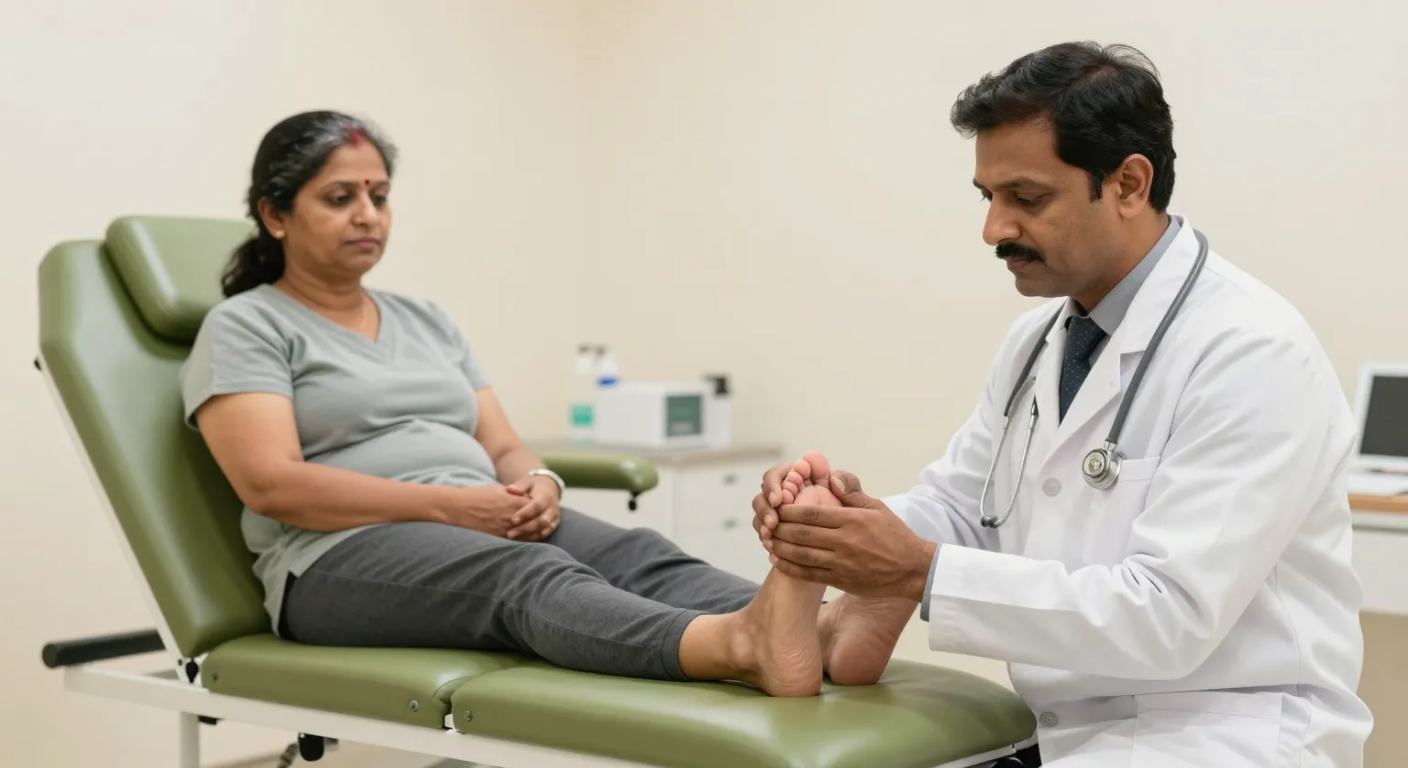
What Exactly Is a Corn?
A corn is a small, cone shaped area of thickened skin that forms where the foot faces repeated pressure or friction, usually over a bony point. The skin thickens to protect itself, however the thickened centre presses inward like a small stone, which is why walking becomes painful.
Corn: A concentrated core of hardened skin, formed by repeated pressure, that presses into the deeper layers of the foot and causes pain on walking.
Consequently, corn removal treatment in Jetpur or anywhere else has two halves, removing the hardened core, and correcting the pressure that created it. Skip the second half, and the corn returns within weeks.
Why Do Corns Keep Coming Back?
Corns return because the pressure source stays. Tight or hard footwear, a bony prominence, a toe that bends abnormally, or a changed walking pattern keeps loading the same spot, and the skin thickens again in self defence. Cutting the corn removes the symptom while the cause continues working underneath.
Moreover, home cutting with blades carries real danger. In diabetic feet, a small cut can become a non healing wound, and health bodies such as the NHS specifically advise diabetic patients never to cut corns themselves and to seek professional foot care instead.
What Are the Treatment Options?
Treatment is matched to the corn's cause and depth, and surgery is only one of the options.
Pressure correction
Soft, wide footwear, silicone pads and custom insoles move pressure away from the spot. For early corns, this alone lets the thickened skin settle over a few weeks.
Professional paring and medication
The hardened core is shaved painlessly by a professional, and keratolytic medicines soften the remaining skin. This gives quick relief, and combined with pressure correction it prevents early recurrence.
Minor surgical removal
For deep, recurrent or painful corns, the core is removed completely under local anaesthesia, and any underlying bony prominence contributing to the pressure is addressed. This is a short daycare procedure with fine sutures, done in a sterile operating room. Related foot skin problems are also handled under our skin care services.
How Is Corn Removal Done?
When surgical removal is chosen, the visit is short and simple.
- Examination. The surgeon confirms it is a corn, not a wart or callus, and finds the pressure source.
- Anaesthesia. Local anaesthesia numbs the spot completely, so the procedure is painless.
- Removal. The corn's core is excised fully, and the small wound is closed with fine sutures.
- Protection. A soft dressing and footwear advice protect the spot while it heals over one to two weeks.
When Is a Corn Risky?
A corn becomes risky when it cracks, bleeds, releases fluid, darkens, or sits on a diabetic foot. In these situations the corn is no longer a cosmetic issue, it is an open door for infection. Diabetic patients from Jetpur searching for corn removal treatment should treat any painful or discoloured corn as a medical matter, not a salon matter.
Similarly, a corn that returns repeatedly at the same spot despite good footwear suggests a bony cause underneath, which deserves a specialist's assessment rather than another round of cutting.
Cost of Corn Removal
The cost of corn removal treatment in Jetpur clinics or in Surat depends on the number of corns, their depth and whether surgical removal is needed. Simple paring with footwear correction costs little, whereas surgical excision of a deep recurrent corn costs more because it uses an operating room. Accordingly, a fixed written estimate is shared after a short examination, and it does not change afterwards.
In addition, EMI and financing options apply to planned procedures, though most corn treatments are small enough that financing is rarely needed.
Realistic Results and Recovery
Relief from pain is usually immediate once the core is removed. The small wound heals in one to two weeks, and most patients walk out of the clinic the same day in soft footwear. Office work resumes the next day, while long walks and tight shoes wait until the surgeon confirms healing.
Honestly, the result lasts only as long as the pressure stays corrected. Patients who continue with the advised footwear almost never see the corn again, whereas returning to hard, tight shoes invites it back within months.
Common Myths
- Cutting a corn at home is fine. Home blades cause infection and, in diabetic feet, wounds that refuse to heal. Professional care is safer and lasts longer.
- Corn caps cure corns. Acid based caps burn healthy skin around the corn and rarely reach the core. They are especially unsafe on diabetic feet.
- A corn is just dead skin. The core presses into living tissue, which is why it hurts. That is also why paring without pressure correction fails.
- Surgery leaves the foot painful for weeks. Removal is a minor daycare procedure. Most patients walk the same day and heal within two weeks.
- All hard skin is a corn. Warts and calluses look similar yet need different treatment, which is why examination comes before removal.
Aftercare That Prevents Recurrence
Aftercare for corn removal is mostly footwear discipline.
- Wear soft, wide toe footwear so the healed spot carries no concentrated pressure
- Use the advised silicone pads or insoles daily, not occasionally
- Keep the small wound dry until the review confirms healing
- Moisturise the feet daily to keep the skin supple, avoiding the space between toes
- Diabetic patients should check both feet every night as routine
Meanwhile, our team remains available on WhatsApp for photos and questions, so a follow up rarely needs a second journey.
Planning the Visit from Jetpur
To be transparent, our clinics are only at Adajan and Vesu in Surat, we have no centre in Jetpur. For simple corns, a good local foot care professional in Jetpur is a reasonable first step. However, for deep recurrent corns, corns on diabetic feet, or corns that have broken into wounds, one planned visit to Elegance Clinic in Surat gives a definitive answer, Jetpur to Surat is about a five hour drive. Share photographs on WhatsApp first for an honest opinion on whether travelling is worth it, and the outstation patient guide shows how examination, removal and review fit into a single trip.
FAQs
Does corn removal hurt?
No. Surgical removal happens under local anaesthesia, so the procedure itself is painless. Mild soreness for a day or two afterwards settles with simple medicines.
How much does corn removal cost?
Cost depends on the number of corns and whether paring or surgical excision is needed. A fixed written estimate is given after a short examination and does not change later.
Will the corn come back after removal?
Not if the pressure source is corrected. Complete core removal plus proper footwear keeps the spot clear in the vast majority of patients.
How long is recovery?
Patients walk the same day in soft footwear. The small wound heals in one to two weeks, and normal shoes return after the review confirms healing.
Are corn caps safe to use?
Acid corn caps damage surrounding healthy skin and rarely remove the core. They are particularly risky for diabetic patients and are best avoided.
Is a corn dangerous for diabetic patients?
It can be. A cracked or cut corn on a diabetic foot can become a non healing wound, so professional care is strongly advised instead of any home cutting.
How many sittings does removal need?
One. Surgical removal is a single sitting daycare procedure, followed by a short review that can happen on video call with photographs.
What is the difference between a corn and a wart?
A corn is pressure thickened skin with a hard centre, while a wart is a viral growth with tiny black dots. They need different treatments, which an examination settles quickly.
Ready to discuss your concern in person? Book a private consultation at our Adajan or Vesu clinic. Call +91 83205 00350 or use the Book Consultation button.